1.646.560.3205
andrew@oscarwildetours.com


Munich and Berlin are Germany’s two great cultural capitals. Although they are very different, they are two of Europe’s greatest cities of art and history, with fabulous museums, palaces, and parks. And of course, they have an amazing and palpable history, with Nazis, Soviets, the Berlin wall, its fall, and so on. But they also have an incredible LGBTQ+ history!
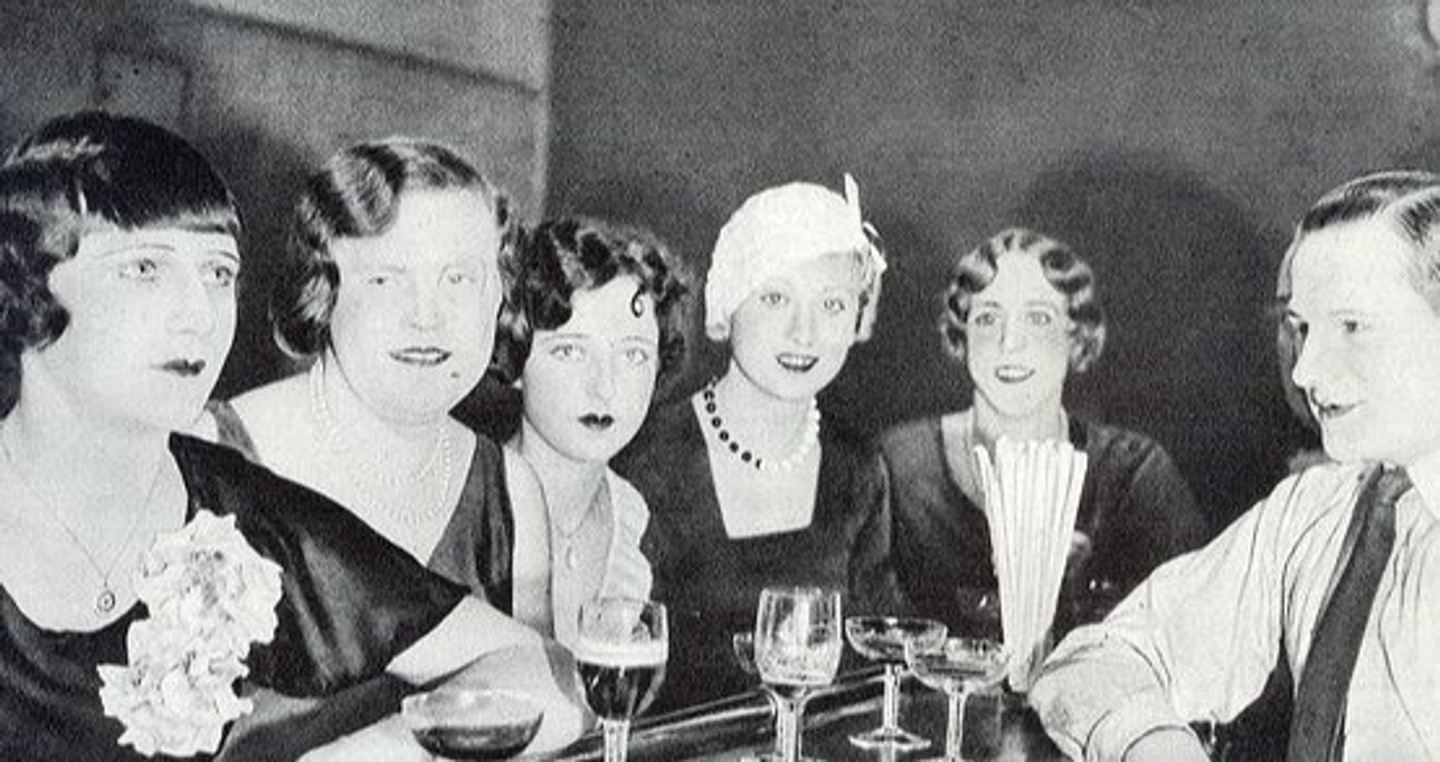
It is in Berlin that the gay rights movement started, that scientific study of sexuality started, there were the first sex reassignment surgeries, and that there was the first city with a wild LGBTQ+ night life. Then of course there was the horrifying backlash, the oppression and mass murder of the Nazi years. But even then, there were incredible ant-Nazi gay heroes—including the founder of the most famous resistance group, Munich University’s White Rose. And since the war there has been plenty of LGBTQ+ history—and nightlife—too, starting in the 1970s, when Freddie Mercury’s favorite hangout was in Munich, and leading to today, when Berlin and Munich are both among the openest, most LGBTQ+ friendly of the world’s major cities.
And this is the tour that will show you it all, the history (including its horrifying sides), the culture, and as always with Oscar Wilde Tours, the LGBTQ+ sides of the story that are generally ignored—does anyone else remember that Hans Scholl was gay, for instance? See it all while staying in excellent hotels, eating in charming restaurants, hearing from Professor Lear and his top-notch guides, and getting to know a group of like-minded LGBTQ+ people!
And this year, for the first time, we offer a post-tour extension to Leipzig, Dresden, and Prague: see where Bach was music director, visit one of the world’s greatest (and less known) art collections, explore Europe’s largest and most complex castle, and follow LGBTQ+ stories from the “Danish Girl” to Fredy Hirsch—another astonishing hero of the resistance in Nazi Europe—a man so polished and commanding that the SS allowed him to teach classes of children inside the concentration camps!
10 night/11 day trip to Germany to see many of its great cultural and historical sights, and especially their LGBTQ+ side, from Mad King Ludwig to Cabaret, Marlene Dietrich, the (gay) White Rose, and Beyond.
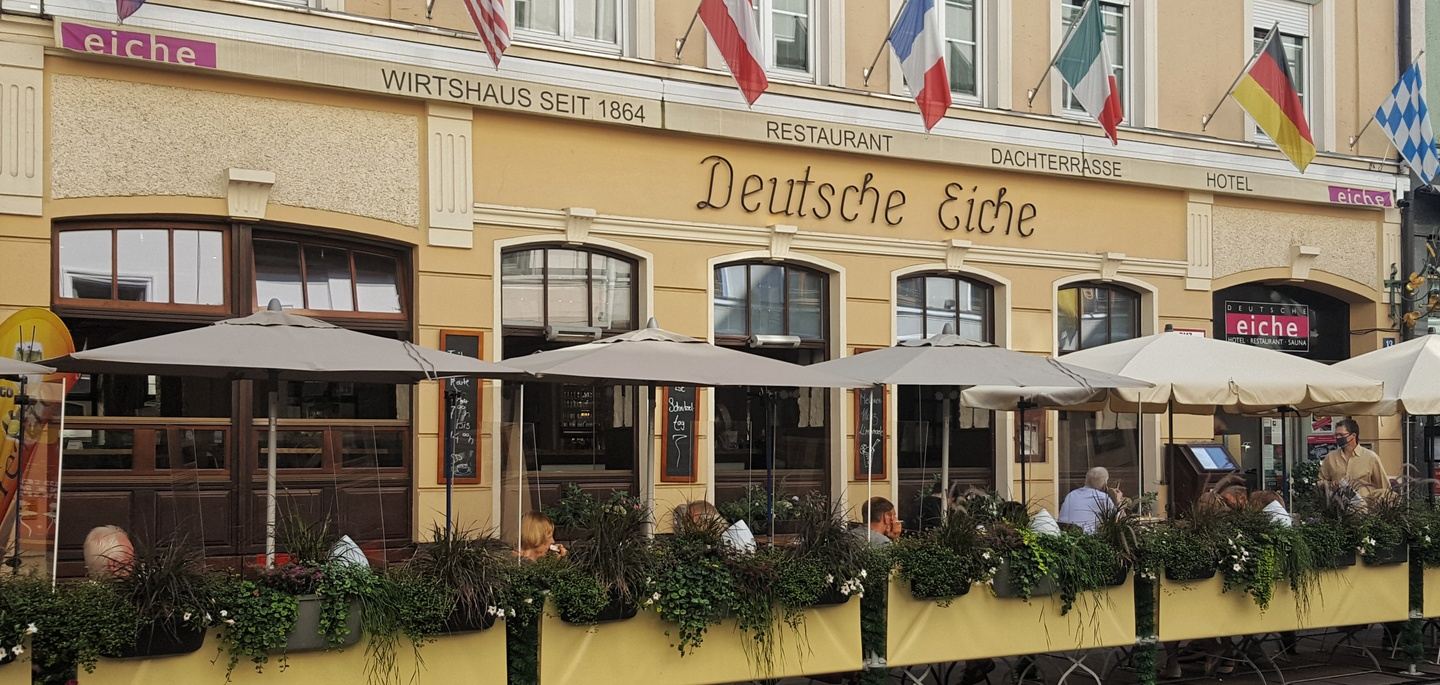
This afternoon, we meet as a group and meet our Munich guide, David, who will take us on the first half of of our two-part Munich walking tour, covering the center, with its churches, palaces, and markets. We will then have our first meal together, a traditional Bavarian meal at the Deutsche Eiche, a pub with a remarkable history, including Hitler (oy!)—but also Rainer Fassbinder, Linda Ronstadt, and Freddy Mercury—and behind (and below and above) which today there is Central Europe’s largest gay bathhouse!
Hotel for 4 nights: Hotel Concorde Munich, a family-owned boutique hotel in the heart of Munich, a short walk from the Marienplatz.
This morning we complete our Munich walking tour with a visit to the city’s royal palace (the palace of the family that ruled Bavaria until Bismarck united Germany, and which gave us both Mad Ludwig and his cousin Empress “Sisi” of Austria, one of history’s great gay icons). After the Residenz, we have lunch at its original brewery—Munich’s famous Hofbrähaus. This afternoon and evening are free for you to explore Munich’s fabulous museums, great shopping, and lively restaurant scene. Note that you have Friday and Saturday evenings free in Munich, so there could be many cultural possibilities. We will keep an eye out and keep you informed (and perhaps we will find something that the whole group could enjoy!)
This morning we look into the heart of darkness on a visit to the concentration camp at Dachau, the original model for the concentration camp system. We learn about the horrors of the Nazi period, and in particular about the persecution of gays—one of whom served as the model for the memorial to Dachau’s prisoners.
In the afternoon to something at least a bit more hopeful: we dedicate this afternoon to the White Rose, an astonishingly brave group of students who distributed anti-Nazi literature in the heart of the regime, until they were caught and executed. Public attention tends to focus on the one girl in the group, Sophie Scholl, rather than on her equally wonderful, and gay, brother Hans, who founded the group. We will pay them both attention as we tour the White Rose foundation, the university (including the atrium where they were caught) and the Justizpalast (palace of justice) where their show trial was held.
This day’s tours will be led by a guide from the White Rose Foundation.
Today we go off into the country and to fantasyland, to visit two of the fabulous palaces built by King Ludwig II, “Mad Ludwig,” Bavaria’s gay 19th century monarch—the patron of Wagner, with whom he was clearly in love (though we doubt that “anything happened”).
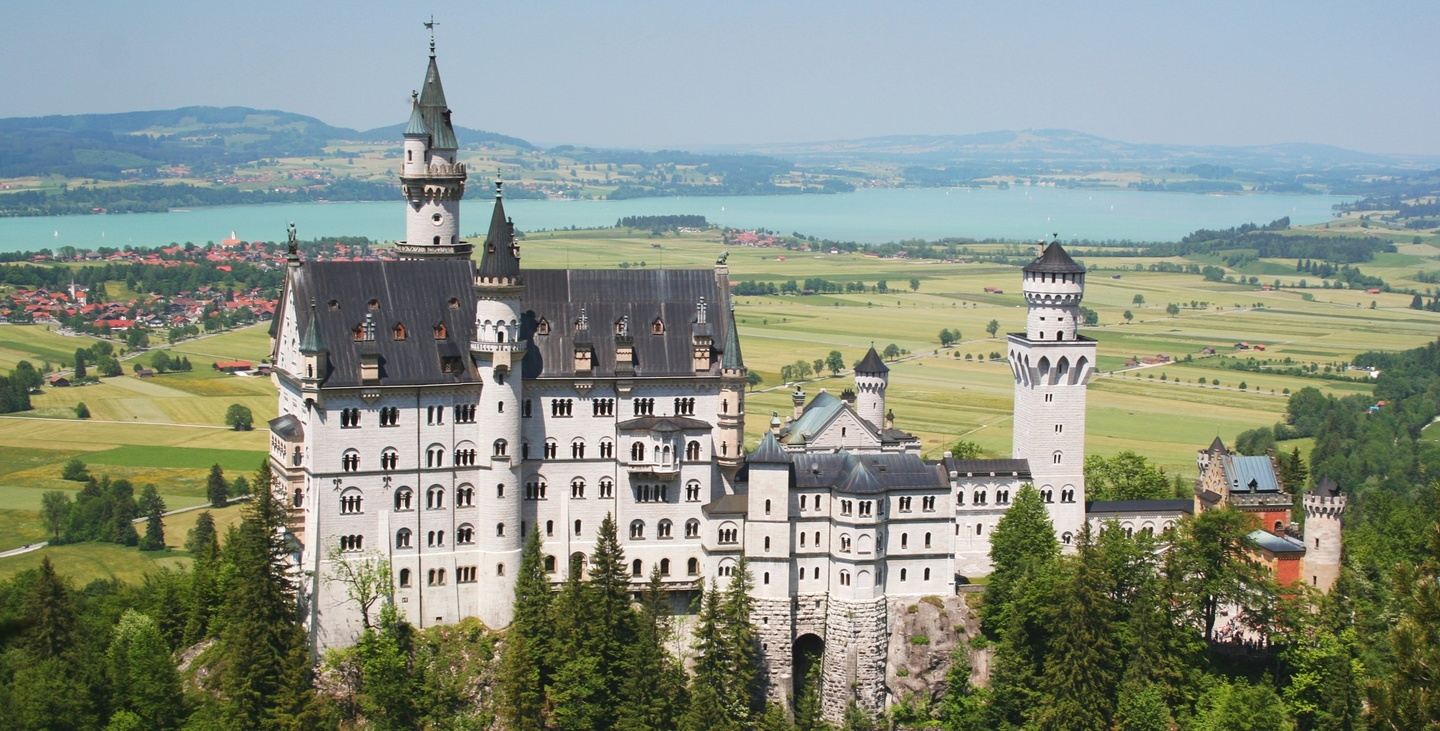
In the morning, we visit Linderhof, Ludwig’s version of Versailles, where he enacted his fantasy of being an absolute monarch. We stop for lunch and a bit of shopping in the lovely village of Oberammergau, famous for its passion play, and then proceed to Neuschwanstein, Ludwig’s medieval-Wagnerian fantasy—which inspired another fantasy castle, Disney’s Sleeping Beauty’s Castle (as will be obvious when you see it). We then return to Munich for a free evening.
Time to get out of Munich!—a week before Oktoberfest, when the town will fill with vomiting straight people! We take the express train (4-5 hours) to Berlin, get a quick lunch, and meet our meet our fabulous gay Berlin guide, Tiago, for a walking tour through the center of the city (which is right out our hotel door) to get our bearings, both spatially and historically.
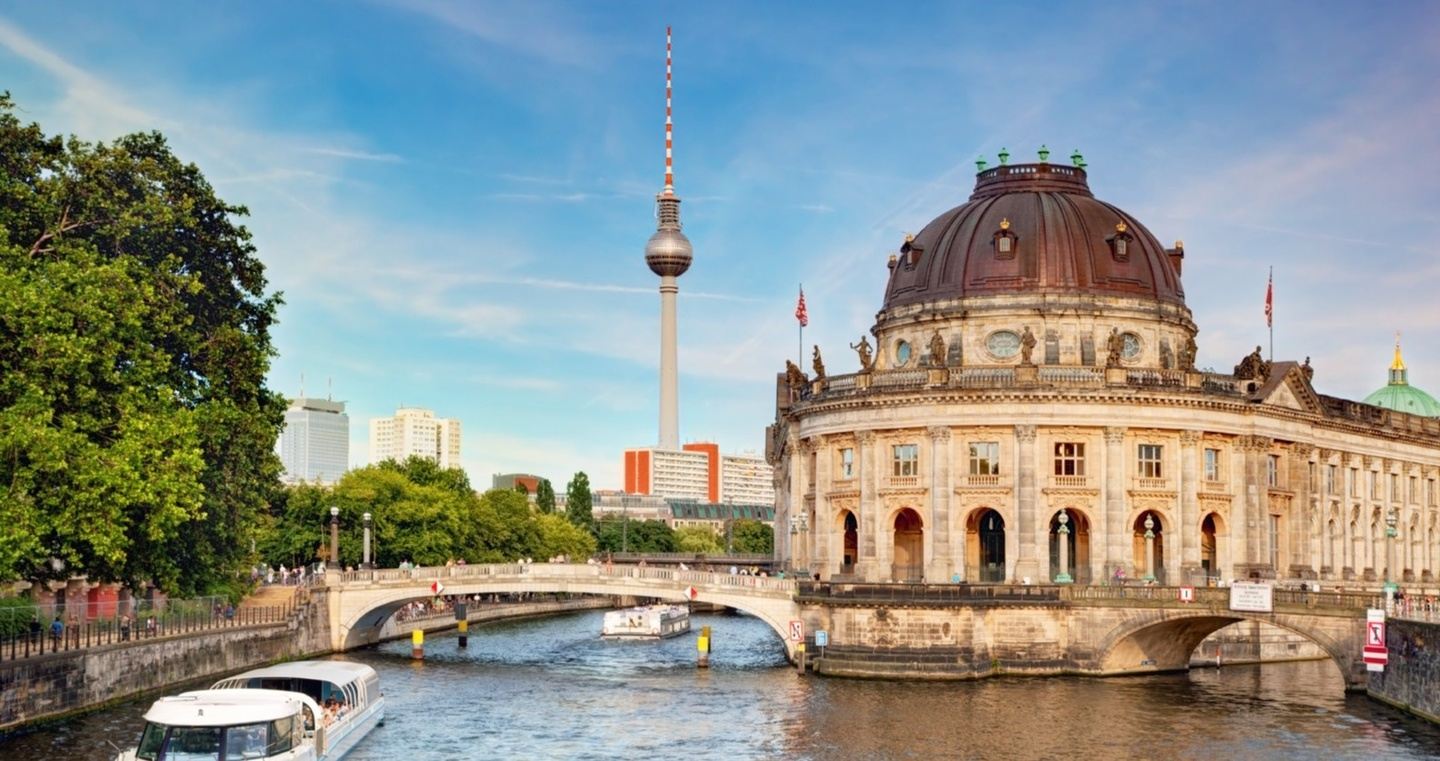
The Nazi period and the years of the divided city loom large, inescapable reminders of Germany’s troubled past: the famous Reichstag that saw the rise of Hitler; the Alexanderplatz, with its Soviet-era TV tower that is still Germany’s tallest structure and remains a symbol of the city; and such key sites as the Bebelplatz, where the Nazis held their most infamous book burning, on May 6, 1933—including, in the pyre, 20,000 books and journals from Magnus Hirschfeld’s Institut für Sexualwissenschaft (Institute for Sexual Science), the world’s first center for LGBTQ+ studies.
Fortunately, though, there’s another side to Berlin, one that is in fact uplifting. Despite its horrifying cataclysms, the city has retained its own charm and vitality, and it’s important to remember that Berlin in the Weimar Republic was the city that Hitler hated, because of its tolerance and diversity. And, fortunately, in the end it was that Berlin which ultimately won!
Hotel for 5 nights: Hotel Maritim pro Arte, a pleasant, modern hotel right on the Friedrichstraße, Berlin’s main drag (if it has one) and a short walk to everything in the city center: Alexanderplatz, Museum Island, Brandenburg Gate, and more.
This morning, we move out into the city and take a famous walking tour of Berlin’s main gayborhood (in the Weimar years and today!) Schöneberg, with author Brendan Nash.
A particular theme of our walk will be Christopher Isherwood’s stay in the area, where he wrote his Berlin Stories—the basis for the musical and film Cabaret—and the bars he and his friends frequented. We will also learn about the childhood of another great LGBTQ+ (and anti-Nazi) Berliner, Marlene Dietrich, who was born in the neighborhood.
We have lunch at one of Schöneberg’s main gay cafés, known for its bric-à-brac and erotic art collection.
After lunch, we cross the street to Berlin’s original gay bookstore, where we will enjoy a lecture (arranged for us but open to the public) on Berlin’s central role in trans history by Dr Finn Ballard, one of the key experts on Berlin’s LGBTQ+ history. Evening free.
Time for a trip into the country! We spend today on an excursion to the charming nearby city of Potsdam, famous for the Potsdam Conference, the bridge of spies, and baroque palaces and gardens.
We will see the palace where the Conference took place and cross the famous bridge, but our main purpose will be to visit the park and palace of Sanssouci, generally known as Germany’s Versailles and the favorite palace of Frederick the Great.
Frederick was Prussia’s great Enlightenment monarch, the early architect of Germany’s rise to world power, and almost certainly gay (as was possibly his clearly gay aide, Baron von Steuben, who trained the American Revolutionary Army). Lunch will be in the town of Potsdam. We then return to Berlin for a free evening and whatever R&R suits you.
We spend this morning in Berlin’s amazing “museum island” (also very close to our hotel). These museums contain some of the most astonishing sites of any museum anywhere—such as ancient Babylon’s Gates of Ishtar. There is also (as is always true with Oscar Wilde Tours) material for a whole “gay secrets” tour, including everything from stunning Greek vases (one of them depicting a gay orgy!) to homoerotic German art of the 19th century. This afternoon and evening are free, for visiting more museums, shopping, or exploring Berlin’s many hip neighborhoods, chic restaurants, and the LGBTQ+ nightlife of the city where LGBTQ+ nightlife was born.
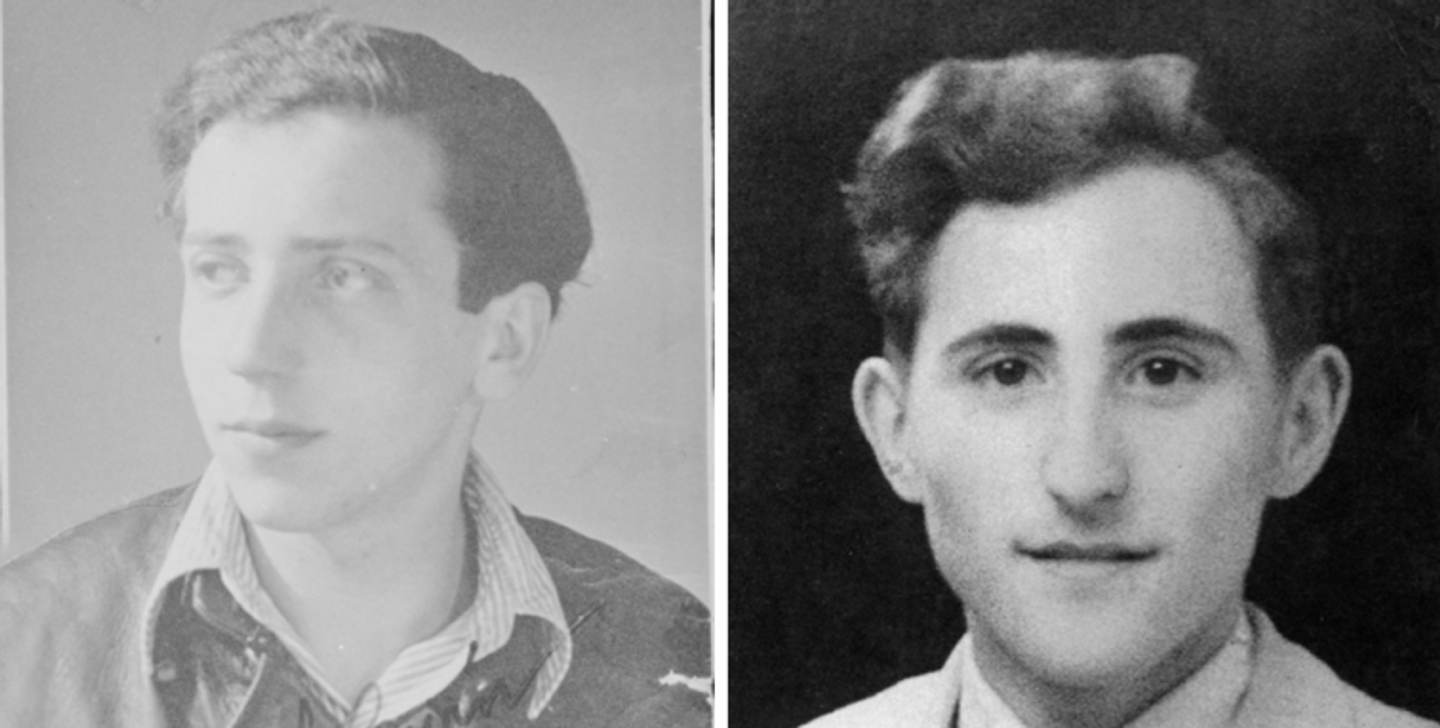
Today we explore the darkest side of German history–but with a ray of hope. In the morning, we go to the frightening museum (right by the old Berlin Wall) called The Topography of Terror, which charts the Nazi period, including the persecution of homosexuals. We return to the center and have some free time for lunch in the old Hackescher Markt market area. After lunch, Professor Lear will guide us on a walking tour through pre-war Berlin’s main Jewish neighborhood, which became the Nazi ghetto, where over 50,000 Berlin Jews were gathered before being shipped out to concentration camps. There will be an uplifting side to this afternoon as well, however, as Professor Lear will weave into it the story of 2 gay Jewish teenagers who led the city’s largest resistance group in WWII—about whom he is currently making a movie! One last free evening to explore Berlin’s lively culinary and cultural offerings. Note that this is Friday evening, so many performances may be available. As in Munich, we will keep you informed, and we will keep an eye out for things that all or most of us might enjoy.
Our tour ends with breakfast this morning, but please join us for our Leipzig and Dresden extension—and let us know if you need help with further travel plans.
On this extension, we will visit Bach’s church in Leipzig (where will hear the famous boys’ choir rehearse), Dresden’s world-class art museums, and Europe’s best-preserved and most beautiful historic city, Prague, all while learning about more inspiring LGBTQ+ stories—the story of Lily Elbe, the “Danish girl,” who her her gender reconfirmation surgery–the 2nd ever–in Dresden, where we will visit her tomb, and the story of a 3rd amazing resistance hero from the Nazi period, Fredy Hirsch, the openly gay man who despite the appalling situation created (as the documentary about him says) “heaven in Auschwitz.”
On day 1, Saturday October 18, we will travel by private bus, first to Leipzig, where we will follow in the footsteps of Johann Sebastian Bach and hear the famous boys’ choir, the Thomanerchor, rehearse in the church where Bach was music director (and we will also eat in a historic pub which plays a role in Goethe’s Faust!). We will then continue on to Dresden, where we hope to catch a performance at the beautiful Semperoper, around the corner from our hotel.
Hotel for 2 nights: Hilton Dresden, a nice modern hotel with great facilities (pool etc) right in the middle of the old city. If you are lucky, your room could have a great view of the gorgeous Frauenkirche, which is in any case right around the corner, as are the opera and the art museums.
On day 2, Sunday October 19, we will visit 2 of Dresden’s great art museums. In the morning, we will explore the Staatliche Kunstsammlungen, with major works by Raphael, Giorgione, Vermeer, Rembrandt, Dürer, and more. The collection of Classical sculpture inspired the founder of art history, Johann Joachim Winckelmann, who theorized (more or less) that you can only appreciate art if you are gay…. We will have lunch in the Opera restaurant, which is not only very good but also has stunning views over the opera house and the palace/museum complex, with its beautiful carillon which chimes out different melodies every quarter hour. In the afternoon, we will visit the Albertinum, Dresden’s modern art museum, with a collection that goes from the Romantics (with lots of Caspar David Friedrich) to the expressionists—often including Dresden’s great (though not famous) gay artist, Sascha Schneider.
On day 3, Monday October 20, we will tour Dresden, with such landmarks as the tomb of Lily Elbe, the “Danish girl,” (restored by the producers of the movie) and the Molkerei Gebrüder Pfund, undoubtedly the world’s most beautiful dairy store, with its 250 square meters of hand-painted 1890s tiles—where we will have a cheese tasting. After lunch, we will take the train (2-3 hours) to Prague, and check into our hotel.
Hotel for 3 nights: the Hotel Rott, a beautifully maintained historic hotel, steps from the Old Town Square—the heart of historic Prague—and only a few minutes from the Vltava River, with views to Prague’s great castle.
On day 4, Tuesday October 21, we will visit Prague castle, the largest castle in the world. The castle contains a world’s worth of history and beauty: there is a cathedral, a basilica, palaces, gardens, museums. After lunch at a traditional Czech restaurant in the castle, we will go for the afternoon out of Prague (about 1 hour) to Terezin (known in German as Theresienstadt), the Nazi’s model concentration camp, to which they deported well-known people, and which they showed world organizations in order to mask their system of death camps. Here we will learn the story of our third anti-Nazi resistance hero, Fredy Hirsch, an athlete who somehow used his excellent German, his good looks and sense of style, his charisma and personal authority, to convince the Nazis to let him protect and even educate children in Terezin and later even (temporarily) in Auschwitz.
On day 5, Wednesday October 22, we will visit Prague’s old town in the morning and then have a free afternoon and evening to explore Prague on our own. Maybe the Franz Kafka museum? (was Kafka gay? quite possibly). For the evening, as in the other cities, programs are not yet available for fall 2027, but I am hoping we will manage to see an opera at the Estates Theater, where Mozart, out of favor in Vienna because of Le Nozze di Figaro and its anti-aristocratic message, premiered Don Giovanni.
On day 6, Thursday October 23, we take the train to Vienna. After a quick lunch, we will do our first of four walking tours in this great, imperial city of culture: a tour about the Vienna Secession, the local art nouveau movement—the movement which gave us among other artists Klimt and Schiele. We visit the Secession exhibit building, with Klimt’s famous Beethoven frieze, created for this building in 1902 and returned here in 1985, and the Leopold Museum, with its vast collections of Klimt, Schiele, and other Austrian artists of the early 20th century, particularly Anton Kolig—one of the painters from my lecture on 10 great unknown gay artists, and a specialist in the male nude.
Hotel for 2 nights: 25Hours Hotel beim Museumquartier. A very nice, modern right around the corner from Kunsthistorisches Museum. It is also quirky, as all the reviews say—but for once, that does not mean flawed, just fun and jazzily designed. Also, it has a very nice rooftop bar, with a great view over Vienna.
On day 7, Friday October 24, we do 2 more Vienna walking tours: in the morning, our tour of Hapsburg Vienna, with a focus on the more scandalous Hapsburgs: Empress Elisabeth (known as Sisi)—empress and highly neurotic beauty icon, Screaming Queen Ludwig’s first cousin and confidante—and her son Crown Prince Rudolph, who died in a suicide pact with his mistress at the royal Mayerling hunting lodge. We visit the royal apartments in the Hofburg Palace and the Imperial crypt in the nearby Capuchin Church. After lunch, we turn to Vienna’s famous composers, with a really special walk to the places where composers have lived and worked—Vivaldi, Haydn, Mozart, Beethoven, Schubert, Chopin, and Mahler. We will visit Mozart’s Vienna apartment (where he wrote Die Zauberflöte) and the church were Schubert sang as a child and played the organ! Note: one of these evenings we may also be able to see a concert at the Theater an der Wien, where Beethoven premiered the 3rd, 5th, and 6th Symphonies, the 3rd and 4th Piano Concertos, and Fidelio!
On day 8, Saturday October 25, we finish our Vienna tour with visits to the city’s two remaining great art museums, the Kunsthistorisches Museum, one of the great Old Master collections, and the Belvedere Museum, most famous for Klimt’s The Kiss (and where the Woman in Gold was displayed until it was returned to its rightful owners). After our intense museum morning, we conclude our tour with one more fabulous Austian meal, as we say goodbye to Mitteleuropa, its cultural richness and its gay history, and to the friends we have made (or spent time with again) on the trip!
As Seen In

Professor Andrew Lear accompanies all of our tours. He is our founder; a famous scholar of same-sex love in the ancient world; and a master guide. Early in his career, Professor Lear won the Harvard Certificate of Excellence in Teaching five times, and on our tours you will see why! He really has the knack of making complex issues comprehensible—and entertaining. In most places, we are also required to have a local guide, and Professor Lear has developed a cadre of specially trained guides to work alongside him.
Professor Lear doesn’t have the time to do 10 tours a year, so our tours are not offered on an annual basis. Our general advice is: if you are interested, come on the tour! You never know when our tours will be offered again.
Absolutely. Our tour groups consist of a mix of singles and couples, usually about 50/50. One thing we can guarantee is that no-one will be left out of any conversation or plan because they are single. On the very first tour we did, we came downstairs in the hotel and found the entire group hanging out in the hotel bar. And that is the way our groups are. They make lots of plans in the evening, and everyone is always welcome.
Absolutely. The average age of our guests is in the 60s, and we often have guests in their 80s.
If you are worried about this, please contact us to discuss. This tour involves a fair amount of walking, in museums, city centers (which in Italy are pedestrian zones), and archaeological sites (which may of course have uneven ground). However, we have had many guests with difficulty walking or climbing stairs, and we generally manage to accommodate them, with a little flexibility on all sides.
Absolutely. Just let us know in advance, and we will handle it.
Our tours cover all kinds of LGBTQ+ history and art. The cultural material on some of our tours (especially in Italy and Greece) is more about gay male issues—but this is not true on other tours, for example, in England or Germany, where we cover a wide spectrum of LGBTQ+ material. Our groups are also very welcoming. We have had a great variety of guests in our groups (incuding even a few allies!) and they have been very much part “one of the family.”
We don’t believe so. Of course we don’t know everything that goes on, but our impression is that our tours are GREAT for making friends instead. Note: we include tours of gay nightlife in a few cities (Berlin and Tokyo so far), but in any case, we provide information about gay bars, saunas, etc. And we know what many of our guests go, often with others from the tour group.
Our hotels are gay friendly, absolutely. In Europe and Japan, our hotels are generally carefully chosen 4 star hotels. As a rule, we choose hotels for modern comfort, historic charm, and central location. In India and Nepal, we use almost exclusively 5 star hotels (except for one restored palace).
We are big foodies, and the meals on our tours are generally very good. In fact, we have often been told we could sell our tours as gourmet experiences. We are particularly concerned to include local specialties and regional cuisines.
We include breakfast every day and on European tours generally one other substantial meal (though occasionally none or two). Since our tours often include activities both morning and afternoon, we tend to include lunch. And we tend to leave you free in the evening, except for the first and last evenings on the tour, when we have welcome and farewell dinners—though of course sometimes we include an extra dinner. This tour includes breakfast every day, 3 lunches, and 3 dinners–all gourmet.
Our tours are not 100% all-inclusive, although pretty close. We include all hotel accommodation during the tour, transportation as per the itinerary, all admissions, and guiding. We include breakfast every day and on European tours generally one other substantial meal (though occasionally none or two). Note: we are NOT in the business of “upselling” our guests. There are very few optionals on our tours—and they are only things we really believe that some guests may not want to do (e.g. helicopter trips).
We generally leave the group free in the evenings, and when we are in a major city, we include a free afternoon, for shopping, more museums etc. On this tour, we have a free afternoon in each Berlin and Munich.
Our tours are based on a very high level of knowledge about LGBTQ+ history and art, and indeed about history and art in general. As a result, we include many places that are interesting and/or important but not well-known. Some of these, like the bar where Oliver plays cards with the locals while Elio watches him in Call Me By Your Name, may be closed to the public or difficult to access; others, like the penis temple of Nagoya, are simply not on the beaten tourist path.
Germany is one of the most gay-friendly countries on earth. In a recent Pew Research study, 94% of Germans said that homosexuality is morally acceptable (as opposed to 60% of people in the US). The only country ahead of Germany was Sweden!
YES. A tour is a big investment, so you need insurance in case you are forced to cancel too late for a refund. This doesn’t happen often, but it has happened a few times in the 13 year life of this company, and the travel insurance companies have been very helpful. But note: you also need travel insurance in case of medical emergency. Your US insurance probably does not cover you abroad, and as we all know, you never know when something will come up. A friend of mine fell on a trip a few years ago and ended up being medivaced from Tunisia to Germany and ultimately back to the US. This would have cost hundreds of thousands of dollars, but luckily, he had good travel insurance, and it was covered 100%. Note: You can buy travel insurance from our ticketing platform, WeTravel, but that that is not obligatory. You should get an insurance policy, but it does not need to be from WeTravel.
Our cancellation policy is flexible. Before the full-payment deadline, we will return any of your deposit that hasn’t been put down in deposits—which generally means we can return 100%. After the full-payment deadline, it is critical (again) that you have travel insurance, as travel insurance will refund your trip in an emergency more completely than we can. We can assure you that it works, because we have seen it work several times: a few guests have had to cancel at the last minute, have been completely reimbursed by their insurance, and in most cases have taken the same tour with us the next time it was offered.
Yes, we can make a payment plan according to your needs.
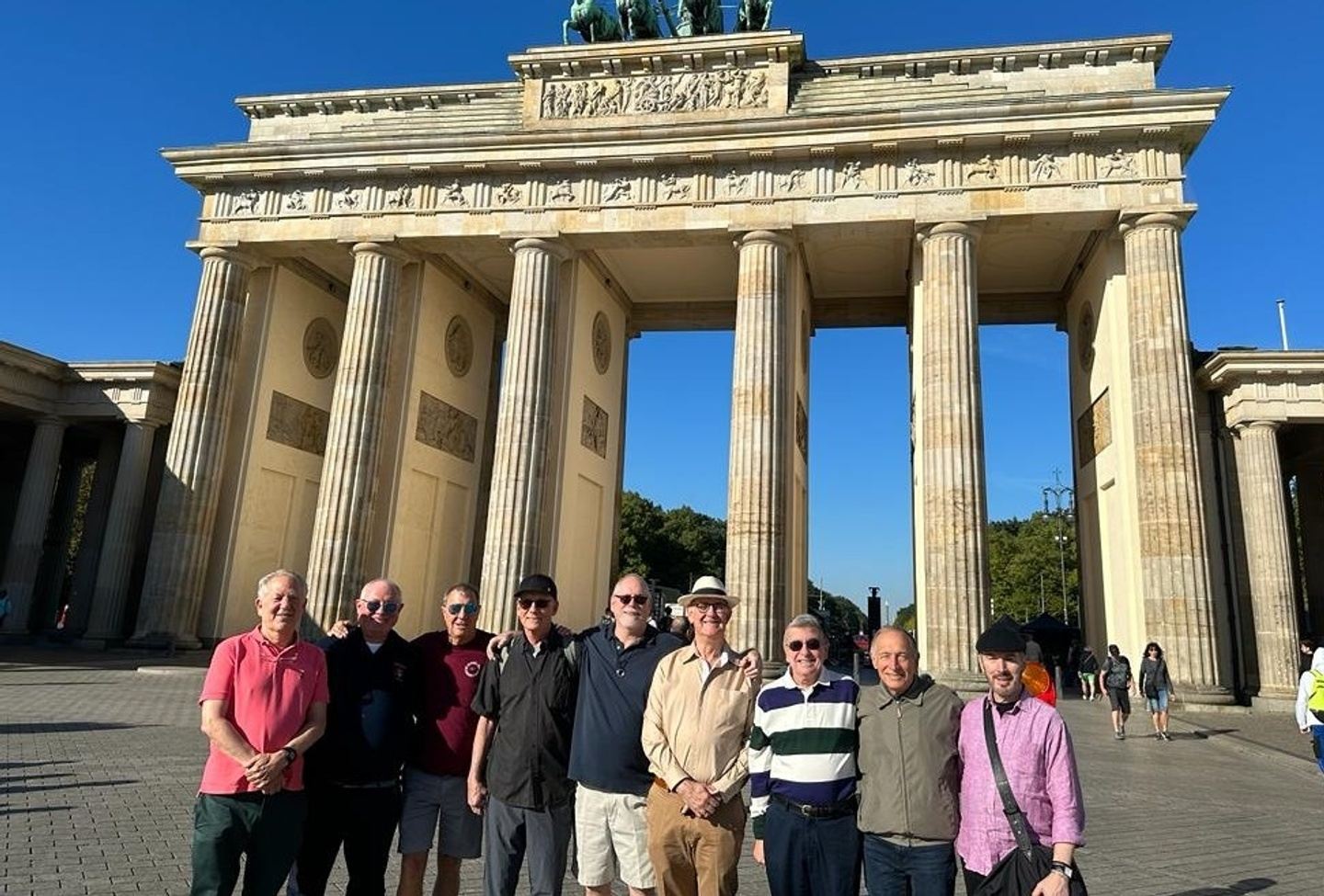
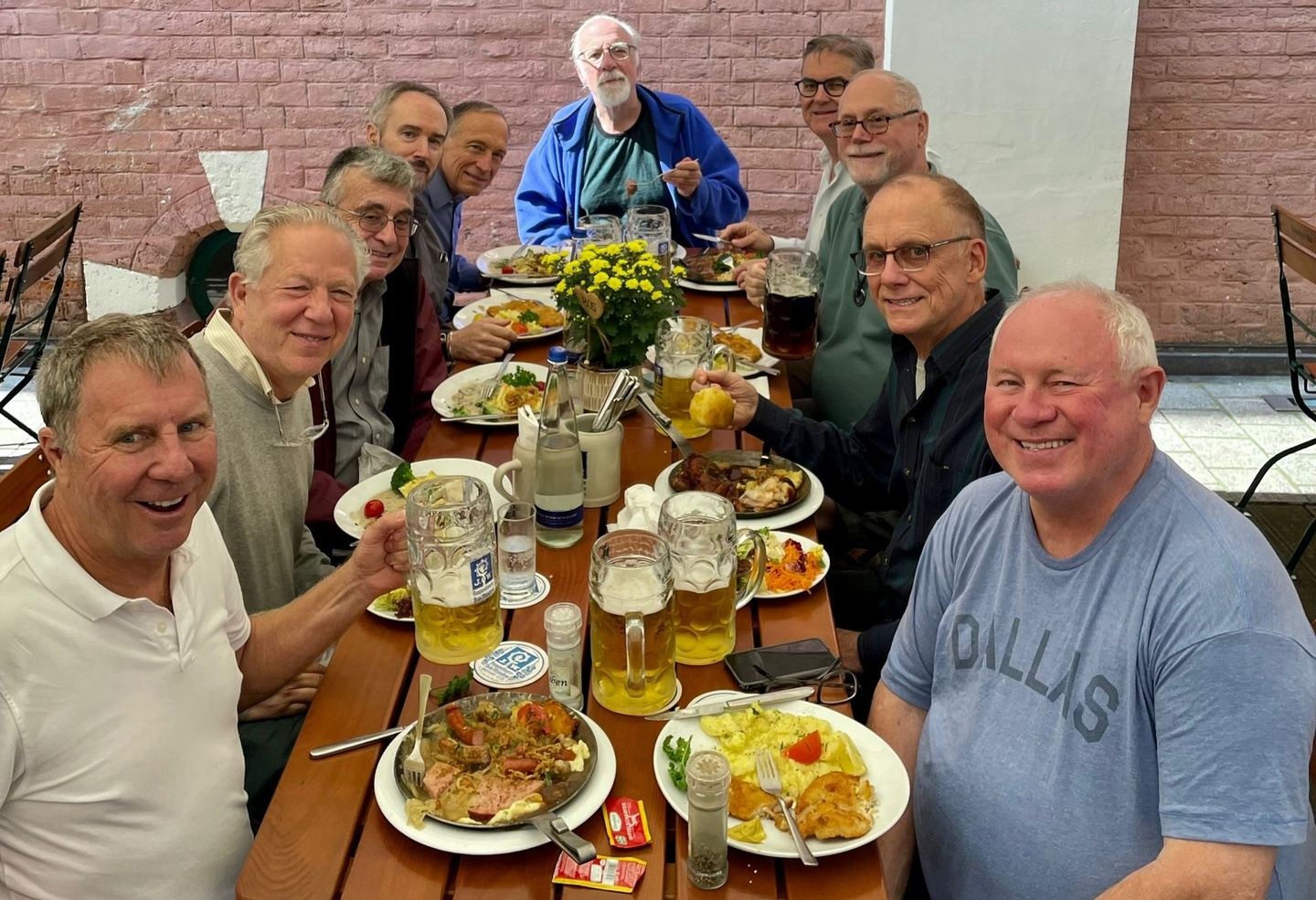
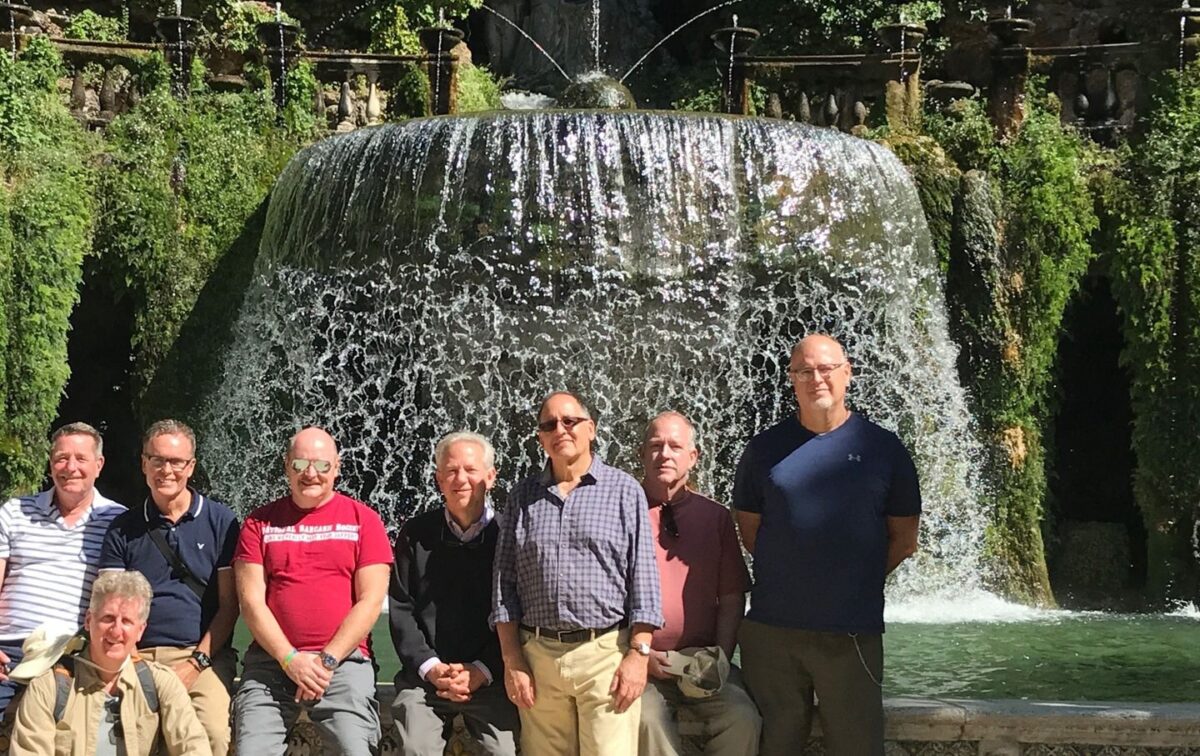

I’m usually hesitant about traveling with group tours, but this one was exceptionally excellent! Berlin and Munich are very different cities, culturally and architecturally, so they offered an interesting contrast of German experiences. The overlay of gay history gave a dimension to the tour that was unique and fascinating. That, in addition to traveling with a group of gay men, gave me a sense of belonging that is often missing when traveling to new places. The group was small and all the members were interesting and collaborative, so it felt very comfortable from the very beginning. In terms of site seeing, we covered many of the important sites which had a gay story to be told, but were also important in and of themselves. There was plenty of “free time” to explore other sites, like museums etc., so the itinerary did not feel overcrowded or rushed. Andrew Lear is a fabulous host/guide! All of the arrangements (hotels, guides, meals) were well chosen. And Andrew is so knowledgeable that the tour truly was an educational experience. I would highly recommend Oscar Wilde tours to any gay man who wants a fascinating, enjoyable and educational vacation in interesting locales. Even if you’ve seen a city before, you probably haven’t experienced it in the same way as you will with an Oscar Wilde tour!
Professor Andrew Lear was the consummate tour guide of a perfect German tour. He was energetic, charming, extremely intelligent, witty, and an excellent teacher, who conveyed his excitement about learning while quickly molding us into a well-functioning, interpersonally sophisticated group. Before, during, and even after the trip he was available almost immediately for answers, advice, and general knowledge; all his recommendations were very, very useful. Andrew has lived in Germany and speaks German fluently, so he personally conducted much of the tour, but he also contracted with bilingual local guides, all gay themselves, for other activities; he accompanied the group everywhere. We followed the published itinerary closely but not rigidly; no activity was mandatory, and we had ample free time. The broad, comprehensive range of diverse experiences accurately portrayed not only specific gay German culture, but also German culture in general. The trip far exceeded my expectations; it was my first Oscar Wilde tour but it definitely will not be my last. I encourage everyone to take an Oscar Wilde tour; you will not be disappointed.
This — Gay Berlin and Munich — was my first trip with Oscar Wilde Tours and it far exceeded all of my expectations! All practical matters were very fine — the hotels, the local transportation, the daily itineraries, the meals together — there were no glitches at all; everything went smoothly. Andrew Lear, in addition to being a conscientious, efficient planner and organizer on the most practical level, is also a very engaging, enlightening, and entertaining lecturer and tour guide: likewise were the local guides that supplemented Andrew’s talks. As an added bonus, the whole group of us got along extremely well, and enjoyed each others’ company. Could not be happier with the experience!