1.646.560.3205
andrew@oscarwildetours.com


Among European countries, Spain has a particularly distinct identity, with many folkloric (or stylized folk) traditions, art forms, and foods: think of flamenco, bull fighting (which many of us might prefer to avoid—but the matadors are still fabulous in their sparkly trajes de luces), zarzuela, paella, tapas, sherry, and so on. But Franco died over 50 years ago, and Spain is also a modern country now: this year, for instance, it is ranked the gay-friendliest country in Europe (and look at Prime Minister Sanchez standing up to our own dear leader!).
And Spain also has some very cool LGBT+ history and culture, ranging from Arabic love poetry from the days of Arabic Al-Andalus to the poetry of Spain’s greatest (gay) poet Federico Garcia Lorca and of course today’s great film maker (and animating spirit of Madrid’s gayborhood, the Chueca) Pedro Almodòvar.
Experience all the sides of gay Spain!
Want to come on a tour that will let you see and experience it all? Come on Gay Spain, from the Alhambra to Almodòvar. Spend time in 4 of Spain’s great cities: 3 days in Barcelona, 3 in Madrid, 2 in Granada (and after a quick stop in Córdoba), 3 in Sevilla—where our following Morocco tour is just a ferry-ride away!
Our tour begins this afternoon. We meet our group, Professor Lear, and our local guide in Barcelona and go for a walking tour to get our bearings. We visit the Gothic Quarter—the heart of the historic city—take a stroll on Las Ramblas—one of the world’s most famous avenues for strolling—see the fabulous exteriors of some famous Gaudí buildings—interiors tomorrow—and take a tour of the spectacular art nouveau Palau de la Música Catalana. And after all that, we have a welcome dinner, our first of many fabulous Spanish meals.
Hotel for 3 nights: the Axel Barcelona. Axel is the only international hotel chain which, although it claims to be hetero-friendly, is focused on the LGBTQ+ market. This is its original hotel, well-known for its friendly, LGBTQ+ vibe and its rooftop bar and pool.
Wednesday April 21. We dedicate today to the greatest of all art nouveau designer architects, Antoni Gaudí. We leave early to see the famous Park Güell, with its colorful, serpentine benches, hopefully before the crowd of visitors arrives. In the morning, we visit two of the master’s most fabulous buildings (both near our hotel), the Casa Batllò, with its amazing, mosaic façade, and the Casa Milà (also known as La Pedrera, the quarry). After another great meal, we go across town to visit the most famous of all his buildings, the basilica of the Sagrada Familia, which was recently (finally!) completed.
Tonight you have a choice. There is a performance of Handel’s Alessandro at the Palau. But if you prefer, our local guides will take you on a tour to show you why our neighborhood, the Eixample, is generally known at the Gayxample!
One of the many spots we pass on our first afternoon is the queen of Barcelona’s great covered markets, La Boqueria. This morning, we take a tour of La Boqueria and buy the ingredients for our lesson in making one of Spain’s (and in particular Barcelona’s) most famous dishes, la paella—which of course we will eat for lunch.
Then you have a free afternoon to explore Barcelona: more Gaudì? Museums? The beach? The choice is yours. There is another opera option tonight, at Barcelona’s famous Gran Teatre del Liceu opera house: Thomas Adès opera version of the Buñuel movie The Exterminating Angel.
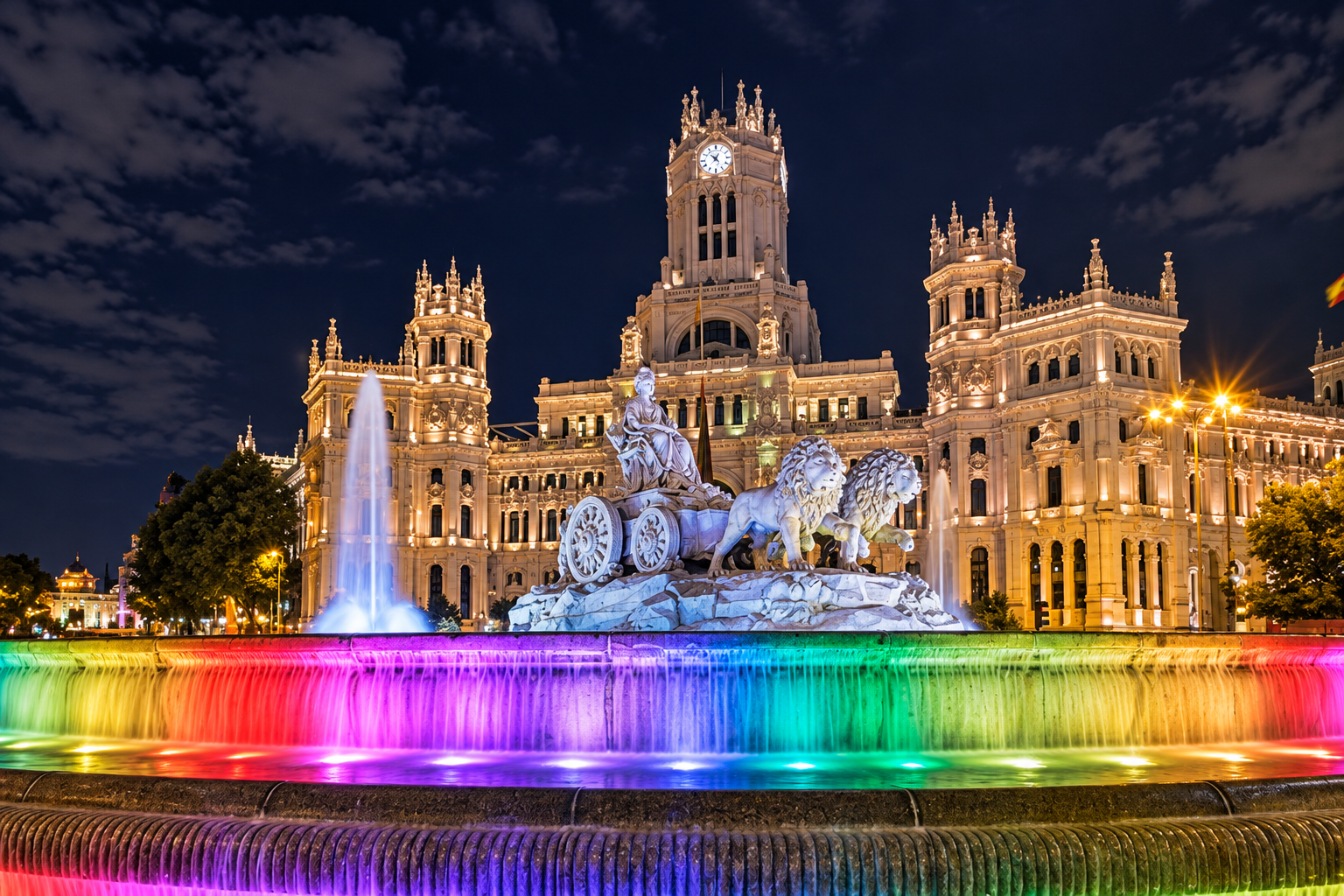
Today we take the train (about 2 ½ hours) to our next great city, Spain’s capital, Madrid. On arrival, we have lunch and then go on an introductory walking tour in the city center, including a visit to the sumptuous Royal Palace—believe it or not, the largest palace in Europe.
This evening we have another opera opportunity: Bellini’s Norma at the Royal Opera with one of today’s leading star sopranos, Marina Rebeka.
Hotel for 3 nights: the Inhala Garden, famous for its “green wall” vertical garden, is a hotel with an artistic theme. There is artwork by emerging Spanish artists throughout the hotel, which is located conveniently between the Royal Palace, the Gran Via, and the Plaza Mayor.
Today we will see lots of Madrid! In the morning, it is time for art museums. The Prado is one of the world’s greatest art museums, especially known for its huge collections of Titian, Velásquez, Goya, and El Greco. It was also, in 2017, when World Pride was in Madrid, the first art museum ever to give an LGBT+ tour, and we will see both its most famous masterpieces and its LGBT+ “Secrets.” We then go the nearby Reina Sofia museum to see the masterpiece at the heart of its collections, Picasso’s Guernica, the artist’s protest against the brutality of war and fascism, that finally returned to Spain in 1981, after many years in exile. The Reina Sofia often also displays a number of contemporary Spanish LGBT+ artists.
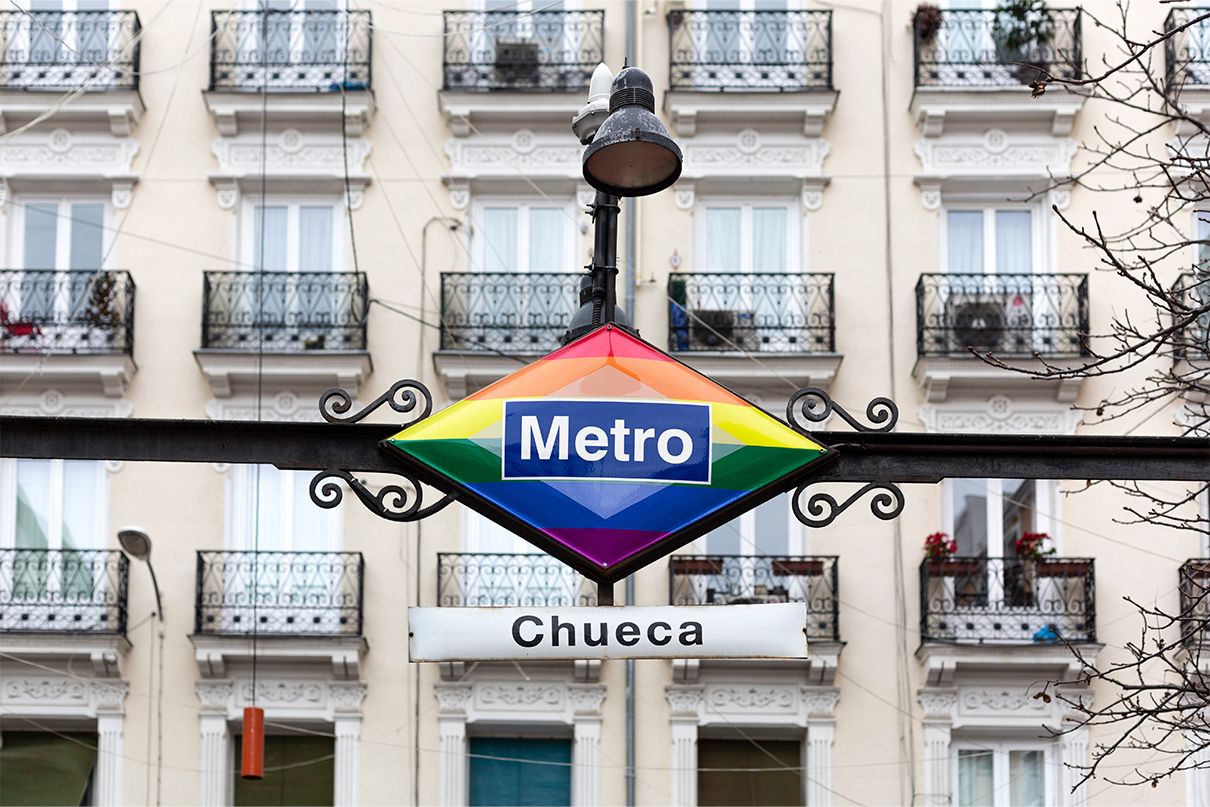
After lunch, we change our theme and tour the Chueca, Madrid’s main gayborhood, and locations for the films of the Chueca’s genius, film maker Pedro Almodòvar. And this evening, we go on our first tapas tour. Madrid is the melting pot of Spanish cuisine, so we will sample tapa specialties from many regions (and of course wine, beer, or sangría, if you like).
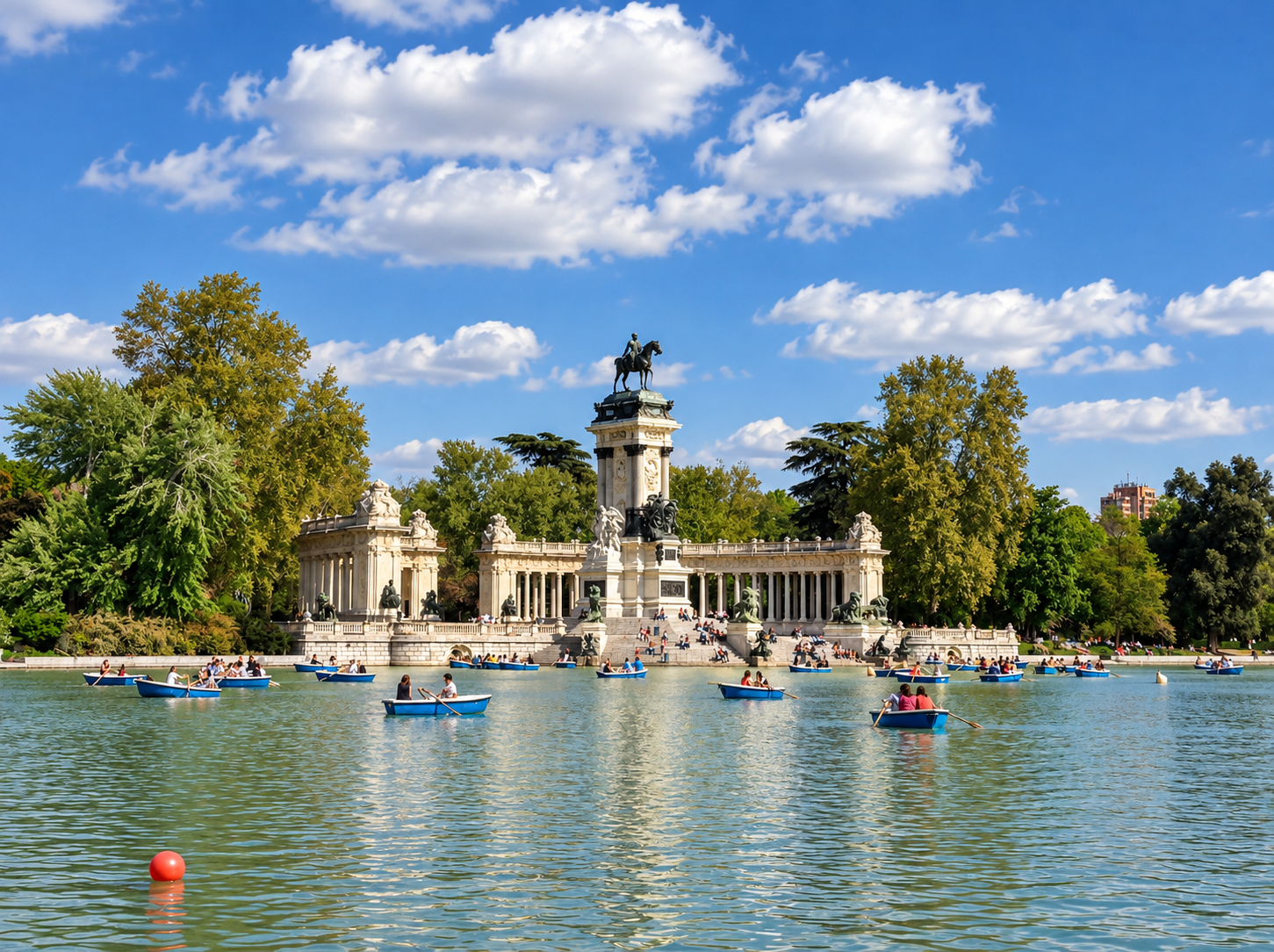
This morning, we return to art and tour the last of the three museums in Madrid’s ‘Golden Triangle,” the Thyssen-Bornemisza museum. The art here was one of the world’s great private art collections until the 1980s; the Baron and Baroness Thyssen-Bornemisza spent years deciding where to found a public museum for their artworks, finally settling on Spain. It’s an amazing collection, and it also has an LGBT+ audioguide, so we will give you time to tour the museum on your own. We then cross the avenue to show you around Madrid’s answer to Central Park, El Retiro, before letting you go for a free afternoon and evening. Explore and enjoy!
Today we take the train south (about 3 ½ hours) to Andalucía, Spain’s southernmost and most romantic region, with a fascinating mixed Spanish-Arabic-Romani culture that gave birth to many of Spain’s traditions, like flamenco, tapas, and bullfighting. We will visit three of its principal cities, starting with Granada, the last part of Arabic Spain to be conquered, in 1492 (which led directly to Ferdinand and Isabella giving Columbus permission to explore—an event which also took place in Granada!). At lunch we start to discover the specialties of this culinarily fabulous city. Then we go to see one of the absolute highlights of this tour (and perhaps of a life traveling): the Alhambra, the palace of Granada’s Arabic Nasrid dynasty and the highpoint of Spain’s Moorish architecture, with its stunning carvings, gardens, and fountains. The Alhambra has inspired many writers, musicians, and artists, from Washington Irving to Manuel de Falla—about whom more shortly—and I am sure it will inspire us as well.
This evening we go on our second tapas tour, with specialties of the area such as Berenjenas con Miel (fried eggplant slices drizzled with local honey) and Remojón Granaino, a Moorish salad of salt cod, orange slices, olives, onions, and olive oil. This meal will be another highlight of the tour!
Hotel for 2 nights: Melià Granada. This is a really fine hotel, modern, comfortable, and very central: you can even walk back to the Alhambra.
This morning we start with a tour dedicated to the two great 20th century geniuses of Granada, Federico Garcia Lorca and Manuel de Falla. Both were deeply connected to the flamenco tradition of their city; they were also friends and artistic collaborators. We know less about de Falla’s sexuality, but he was probably gay; Lorca was not only gay but remarkably out for his period—which, sadly, led to his murder by fascists near Granada in 1936. Our tour will include the Lorca family’s summer house, the Huerta de San Vicente, where Lorca wrote many of his most famous works, such as Blood Wedding. Today you are free for lunch and the afternoon, but we will reconvene in the evening for a walking tour in the old Moorish section of Granada, the Albaicín, and the traditional Romani neighborhood, the Sacromonte—with beautiful views over the Alhambra and out to the mountains of the Sierra Nevada. You are free to book a flamenco dinner show in this area afterwards, but we will take you to more authentic, less touristy flamenco in Sevilla.
Today we travel by bus. First we go from Granada to Córdoba, where we visit the spectacular cathedral—a cathedral that was obviously created as a mosque. We then have lunch in Córdoba and proceed to our last fabulous (perhaps our most fabulous) city, Sevilla, a city that encapsulates all of the complicated history and traditions of Andalucía. On the bus, Professor Lear will tell us about the tradition of Arabic gay love poetry, with its strong connections to Andalucía, and one of the next three evenings (depending on programming) we will take you to an authentic flamenco show: you may even see the staff of the theater join in….
Hotel for 3 nights: Eurostars Sevilla Boutique Hotel. Five minutes on foot from Sevilla’s cathedral, this hotel is a renovated 16th century palace, with an outdoor pool and a beautiful rooftop terrace.
Today we tour Sevilla, from the great cathedral—the world’s largest Gothic church—and its famous tower, la Giralda (which you can climb if you feel up to it) to the traditional neighborhoods of Santa Cruz and Triana, where we learn about their Jewish and Romani pasts and their deep connections with flamenco and bullfighting. Also, we will see the Royal Tobacco Factory where that symbol of Andalusian culture, Carmen, worked (now the university president’s office!) and the square where she seduces Don José. Lunch included.
Today we take an excursion to Itálica, the ancient Roman city just outside of Sevilla (and whose ruins provided the columns for many of Sevilla’s great buildings) to learn about the two Roman Emperors who were born here, Trajan and Hadrian—two of the gayest Roman Emperors (move over, Nero!). This afternoon is free for your explorations, but in the evening we reconvene for one last fabulous Spanish meal.
Our tour ends with breakfast today, but stay with us for our following tour to Morocco—just a ferry ride away. Or let us know how we can help with your travel plans.
Professor Andrew Lear accompanies all of our tours. He is our founder; a famous scholar of same-sex love in the ancient world; and a master guide. Early in his career, Professor Lear won the Harvard Certificate of Excellence in Teaching five times, and on our tours you will see why! He really has the knack of making complex issues comprehensible—and entertaining. In most places, we are also required to have a local guide, and Professor Lear has developed a cadre of specially trained guides to work alongside him.
Professor Lear doesn’t have the time to do 10 tours a year, so our tours are not offered on an annual basis. Our general advice is: if you are interested, come on the tour! You never know when our tours will be offered again.
Absolutely. Our tour groups consist of a mix of singles and couples, usually about 50/50. One thing we can guarantee is that no-one will be left out of any conversation or plan because they are single. On the very first tour we did, we came downstairs in the hotel and found the entire group hanging out in the hotel bar. And that is the way our groups are. They make lots of plans in the evening, and everyone is always welcome.
Absolutely. The average age of our guests is in the 60s, and we often have guests in their 80s.
If you are worried about this, please contact us to discuss. This tour involves a fair amount of walking, in museums, city centers (which in Italy are pedestrian zones), and archaeological sites (which may of course have uneven ground). However, we have had many guests with difficulty walking or climbing stairs, and we generally manage to accommodate them, with a little flexibility on all sides.
Absolutely. Just let us know in advance, and we will handle it.
Our tours cover all kinds of LGBTQ+ history and art. The cultural material on some of our tours (especially in Italy and Greece) is more about gay male issues—but this is not true on other tours, for example, in England or Germany, where we cover a wide spectrum of LGBTQ+ material. Our groups are also very welcoming. We have had a great variety of guests in our groups (incuding even a few allies!) and they have been very much part “one of the family.”
We don’t believe so. Of course we don’t know everything that goes on, but our impression is that our tours are GREAT for making friends instead. Note: we include tours of gay nightlife in a few cities (Berlin and Tokyo so far), but in any case, we provide information about gay bars, saunas, etc. And we know what many of our guests go, often with others from the tour group.
Our hotels are gay friendly, absolutely. In Europe and Japan, our hotels are generally carefully chosen 4 star hotels. As a rule, we choose hotels for modern comfort, historic charm, and central location. In India and Nepal, we use almost exclusively 5 star hotels (except for one restored palace).
We are big foodies, and the meals on our tours are generally very good. In fact, we have often been told we could sell our tours as gourmet experiences. We are particularly concerned to include local specialties and regional cuisines.
We include breakfast every day and on European tours generally one other substantial meal (though occasionally none or two). Since our tours often include activities both morning and afternoon, we tend to include lunch. And we tend to leave you free in the evening, except for the first and last evenings on the tour, when we have welcome and farewell dinners—though of course sometimes we include an extra dinner. This tour includes breakfast every day, 7 lunches, and 2 dinners–all gourmet.
Our tours are not 100% all-inclusive, although pretty close. We include all hotel accommodation during the tour, transportation as per the itinerary, all admissions, and guiding. We include breakfast every day and on European tours generally one other substantial meal (though occasionally none or two). Note: we are NOT in the business of “upselling” our guests. There are very few optionals on our tours—and they are only things we really believe that some guests may not want to do (e.g. helicopter trips).
We generally leave the group free in the evenings, and when we are in a major city, we include a free afternoon, for shopping, more museums etc.
Our tours are based on a very high level of knowledge about LGBTQ+ history and art, and indeed about history and art in general. As a result, we include many places that are interesting and/or important but not well-known. Some of these, like the bar where Oliver plays cards with the locals while Elio watches him in Call Me By Your Name, may be closed to the public or difficult to access; others, like the penis temple of Nagoya, are simply not on the beaten tourist path.
Italy is actually very gay-friendly. It has got a bad reputation in recent years, because it does not have gay marriage. But Italy was not homophobic in the way the US and UK were in previous eras, so while it has not caught up with the rest of Europe on gay rights, it was and is a safe and friendly country for LGBTQ+ travelers.
YES. A tour is a big investment, so you need insurance in case you are forced to cancel too late for a refund. This doesn’t happen often, but it has happened a few times in the 13 year life of this company, and the travel insurance companies have been very helpful. But note: you also need travel insurance in case of medical emergency. Your US insurance probably does not cover you abroad, and as we all know, you never know when something will come up. A friend of mine fell on a trip a few years ago and ended up being medivaced from Tunisia to Germany and ultimately back to the US. This would have cost hundreds of thousands of dollars, but luckily, he had good travel insurance, and it was covered 100%. Note: You can buy travel insurance from our ticketing platform, WeTravel, but that that is not obligatory. You should get an insurance policy, but it does not need to be from WeTravel.
Our cancellation policy is flexible. Before the full-payment deadline, we will return any of your deposit that hasn’t been put down in deposits—which generally means we can return 100%. After the full-payment deadline, it is critical (again) that you have travel insurance, as travel insurance will refund your trip in an emergency more completely than we can. We can assure you that it works, because we have seen it work several times: a few guests have had to cancel at the last minute, have been completely reimbursed by their insurance, and in most cases have taken the same tour with us the next time it was offered.
Yes, we can make a payment plan according to your needs.
As Seen In


I’m thrilled about this tour! Thank you Professor Lear.