1.646.560.3205
andrew@oscarwildetours.com


Just an hour boat ride across from Spain, Morocco is a truly fascinating country. With its remarkable blend of French, Arabic, Berber (the indigenous people), and African cultures, it is one of the few remaining places in the world that feels really exotic—also perhaps because it often feels as if it’s in an earlier century. With its fabulous Islamic architecture, its teaming souks—full of the many handicrafts still carried on in Morocco, leatherwork, hand-painted tiles, carpets, spices—its beautiful cities, deserts, rugged mountains, lush gardens, traditional inns (riads) with tiled courtyards centered on elegant fountains… it is one of the countries that repays a visit with rich experiences. And of course it has a long LGBTQ+ tradition, both a native one—which the government does its best, unsuccessfully, to repress—and one of visiting Westerners, who came to Morocco in times when the West was far more repressed. Oscar and Bosie and Gide were actually in Algeria (which is not a place for LGBTQ+ groups today, sadly) but here in Morocco Tennessee Wiliams, Truman Capote, The Beats, Joe Orton, Yves Saint Laurent (who was actually from Algeria) and his partner Pierre Bergé lived, loved, and left traces of themselves—including William Burrough’s Naked Lunch, written in Tangier, and Saint Laurent and Bergé’s fabulous garden in Marrakech.
See it all with Oscar Wilde Tours
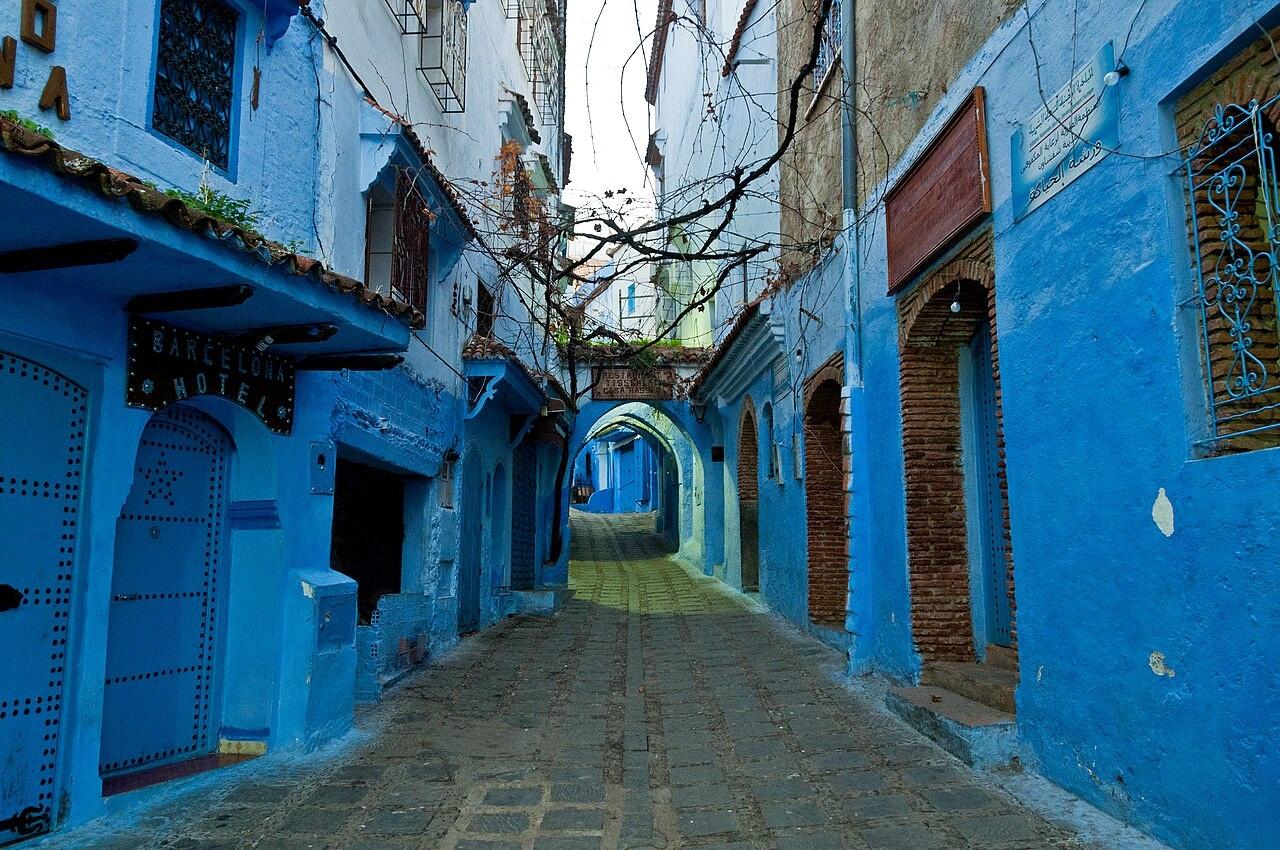
And this is the tour that will let you discover it all, from Tangier to Marrakech, with stops in the gorgeous blue city of Chefchaouen, the glorious Roman ruins of Volubilis, the royal city of Fes, the coastal beauty of Essaouira, and finally modern Casablanca. We will explore the cities, the souks, the crafts workshops, the desert, the mountains, the coast, the gay history—and of course also the world-famous cuisine, truly one of the world’s greats, with specialties like couscous, tagine, rfissa, pastilla, and more! Plus, as always with Oscar Wilde Tours, excellent hotels, the leadership of our founder Professor Andrew Lear, specially trained local guides, and a lively, welcoming LGBTQ+ group.
Today we meet Professor Lear and our local guide and our group at our hotel in Tangier (though some will probably come with Professor Lear from Spain and enjoy the dramatic views of Tangier from the sea). Tangier today lacks the laid-back charm of the other cities we will visit. But our guide will steer us around the touts as we visit our first casbah (citadel) and our first medina (historic city), plus the beautiful coastline of Cap Spartel, where we will visit the famous lighthouse and the caves which in myth were created by that bisexual strongman Hercules. And above all, we will follow the footsteps of the gay and lesbian writers who found freedom here in the post-WWII period: Tennessee Williams, Truman Capote, Paul and Jane Bowles, the Beats, Joe Orton, and more. The cafés where they wrote while living freer gay lives than they could at home are still there, and we will check them out!–as well as the Paul Bowles rooms in the charming American Legation Museum. And this evening, we will start our tour of Moroccan cuisine with some of the seafood specialties of Tangier, like tagra (a northern-style fish tagine).
Hotel: the Fairmont Tazi Palace, a spacious, tranquil luxury hotel blending modern comfort and Moroccan traditions. Enjoy the beautiful pool and gardens, and the excellent breakfast.
This morning we drive about 2 hours through the dramatic Rif mountains to the mountain city of Chefchaouen—the blue city. We visit the area of the Grand Mosque, the medina, the souks (markets), and the casbah, with its beautiful gardens and view over the blue city. For those who feel up to it, we hike up to the Spanish mosque at day’s ends for a beautiful view. Today the cuisine can shift from the sea to the mountains, where we taste local specialties such as goat tagine and mountain herb mint tea.
Hotel: Dar Ba Sidi & Spa is set among orange trees about 15 minutes outside Chefchaouen, with great views of the mountains.
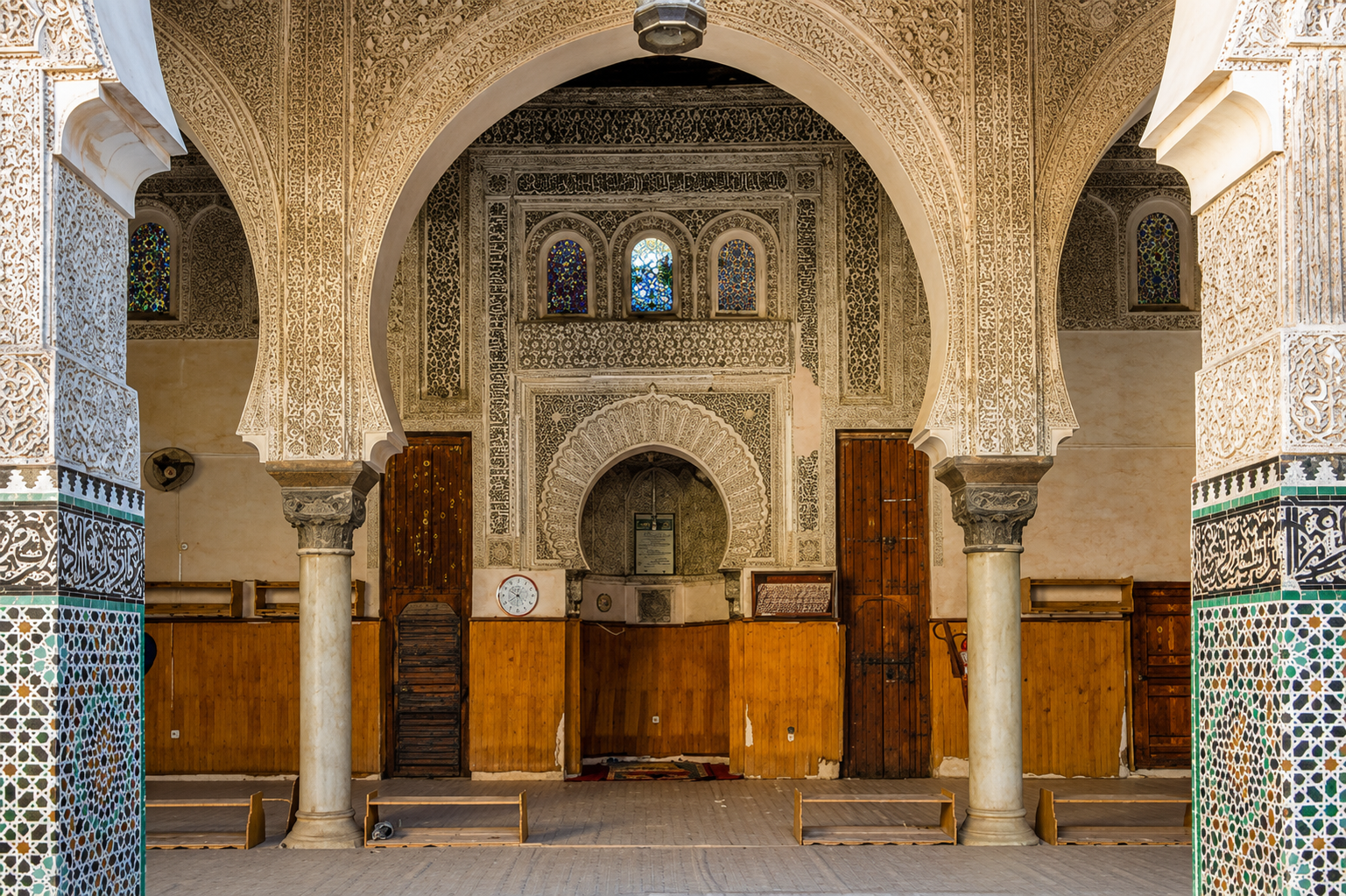
Today, on our way to Fes, we stop to visit one of the most dramatic—and well-preserved— ruined Roman cities, Volubilis, the capital of the province of Mauretania Tingitana. This was an important agricultural province, which supplied Rome with produce, especially olive oil. As a result, it had grand public buildings (as seen above) and in particular many elegant houses, where today we can still admire their wonderful mosaics. After lunch, we take off for Fez, where we start our exploration of the medina, with great examples of Moroccan architecture, especially the beautiful Bou Inania madrasa (religious school). Fez is also the culinary heart of Morocco, with specialties like swee mrouzia tagine (with honey, raising, and almonds), pastilla (layered puff pastry with pigeon, almonds, and cinammon), and mechoui, lamb slow roasted in an underground clay oven.
Hotel: the Riad Maison Bleue & Spa, our first riad. One of the great things in Morocco are the beautiful, traditional houses called riads—houses arranged around tranquil and often beautifully tiled courtyards with fountains, and generally a roof terrace.
This morning we set off early to visit the medina before it gets crowded. We watch craftsmen in different areas of the souk: woodcarvers, tanners, and copper workers. After lunch, we take off for Marrakesh, passing through the rolling agricultural fields and the foothills of the Atlas Mountains. Lunch will be on the way.
Hotel for 3 nights: The Riad Les Trois Palmiers el Bacha is a gem in the heart of the medina, combining Moroccan traditional opulence with modern comfort, and only 10 minutes walk from the vast Jemaa El-Fnaa square.
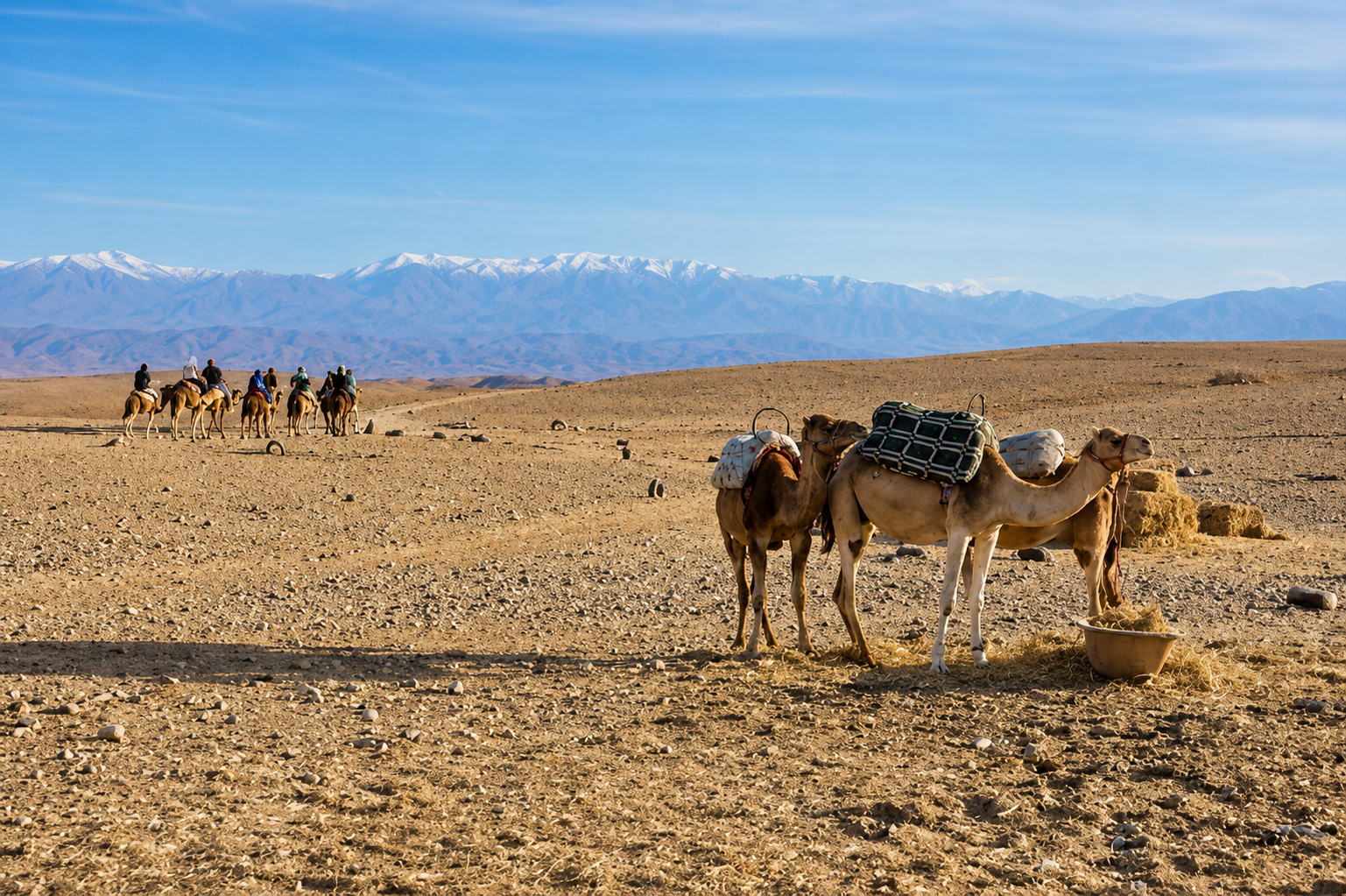
This morning we visit Marrakesh’s medina: the vast and spectacularly decorated Bahia Palace, the Mellah (historic Jewish quarter), and the souk, with its markets for spices, leather goods, metalwork, and other handicrafts, and the vast square called Jemaa El-Fnaa, where Arab and African cultures mix–with cross-dressed traditional dancers, snake charmers, and more. For lunch we take off toward the Atlas Mountains, to have a cooking class in a traditional Berber house, where we learn to make Moroccan salads, tagines, hand-kneaded flatbread, and Moroccan mint tea. After lunch, it is down into the vast Agafay desert, where we learn to ride the ship of the desert–i.e. camels–and experience a dinner with live traditional Moroccan music around a campfire!
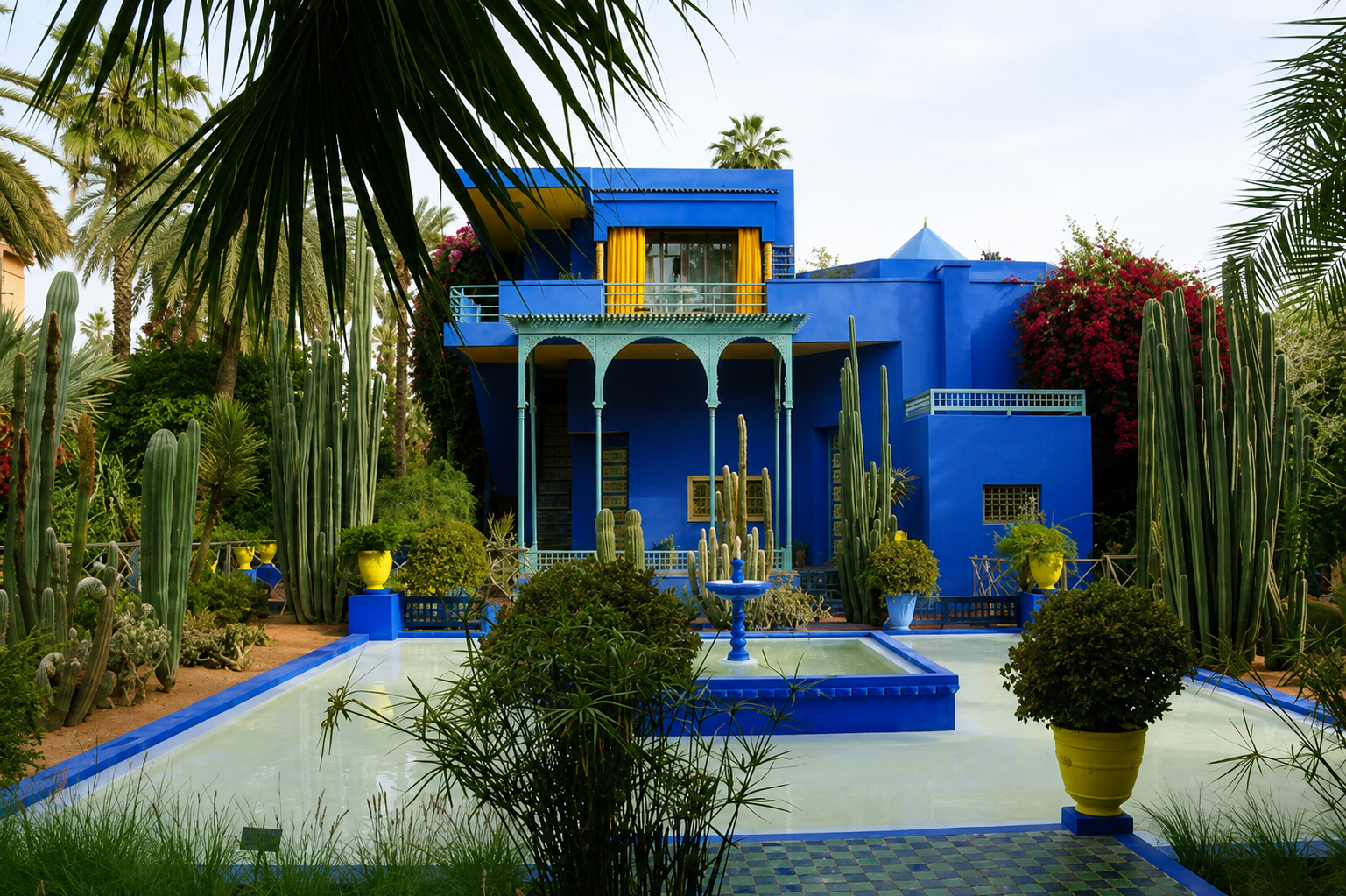
This morning we go to the nouvelle ville (the French colonial “new city”) to visit one of the world’s most amazing botanical gardens, created in the 1920s-1950s by the French artist Louis Majorelle and purchased in the 1980s by French (but Algerian-born) designer Yves Saint Laurent and his husband Pierre Bergé, who had fallen in love with Morocco and Marrakesh in particular. We visit the gardens and the nearby Yves Saint Laurent museum. On return to the medina, we visit a traditional carpet workshop and have lunch, before a free afternoon to explore the souks on our own (and then regrouping for dinner).
This afternoon we also offer an optional visit to a hammam (Turkish bath)—a classic experience of the mideastern world–with or without massage.
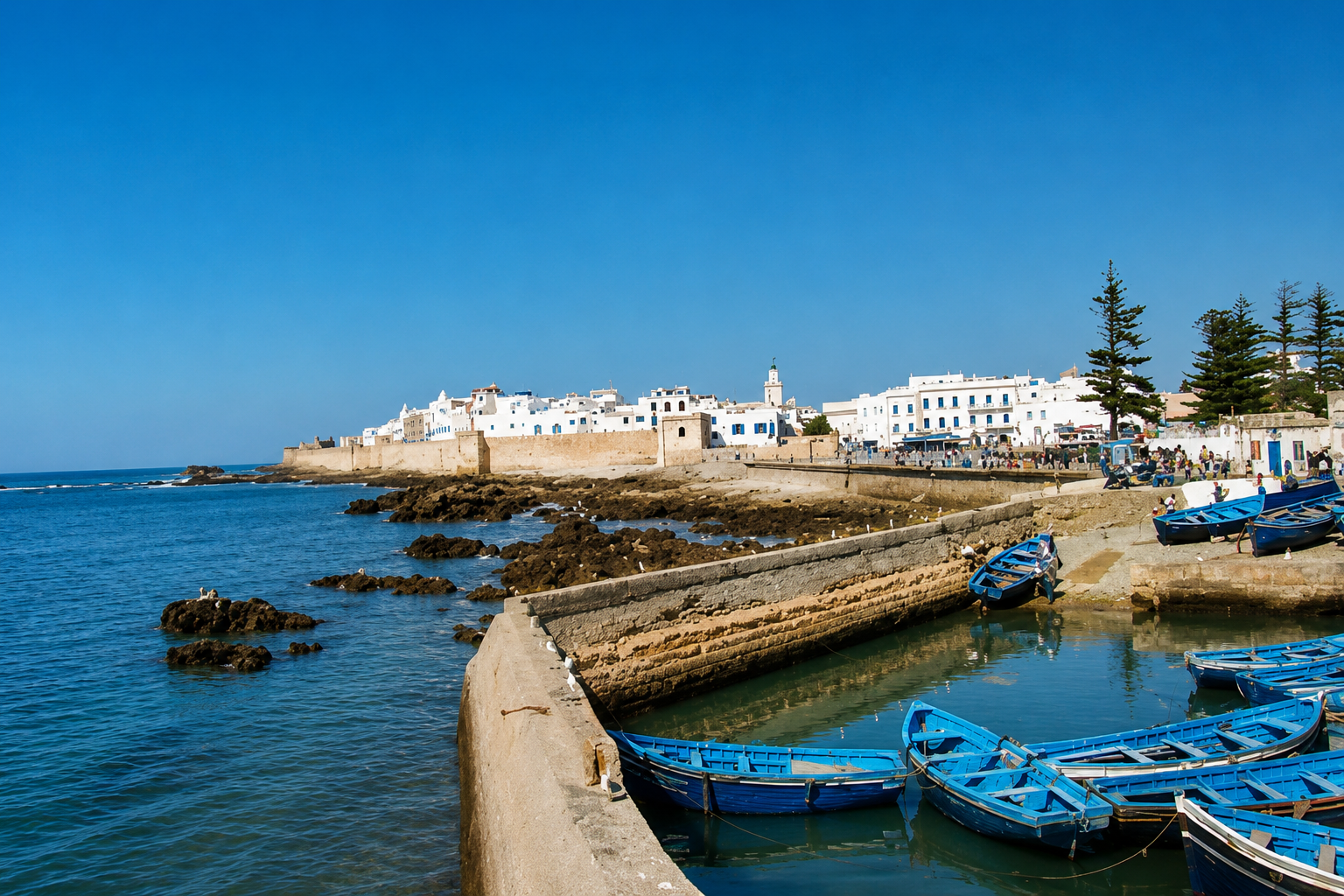
Today we drive (about 3 hours) from Marrakesh to the coast at Essaouira (formerly known as Mogodor), visiting a women’s craft cooperative on the way, with rose or argan products. After lunch we explore the city, from the fishing port and the coastal fortress (Skala de la Ville) to the medina and the Moulay Hassan Square. Essaouira is much smaller than the other cities we have visited (except Chefchaouen) and much more relaxed, and we will have time to explore and relax on our own.
Hotel: Riad Maison du Sud, our last riad, in the heart of the Medina, and only 330 yards from the beach.
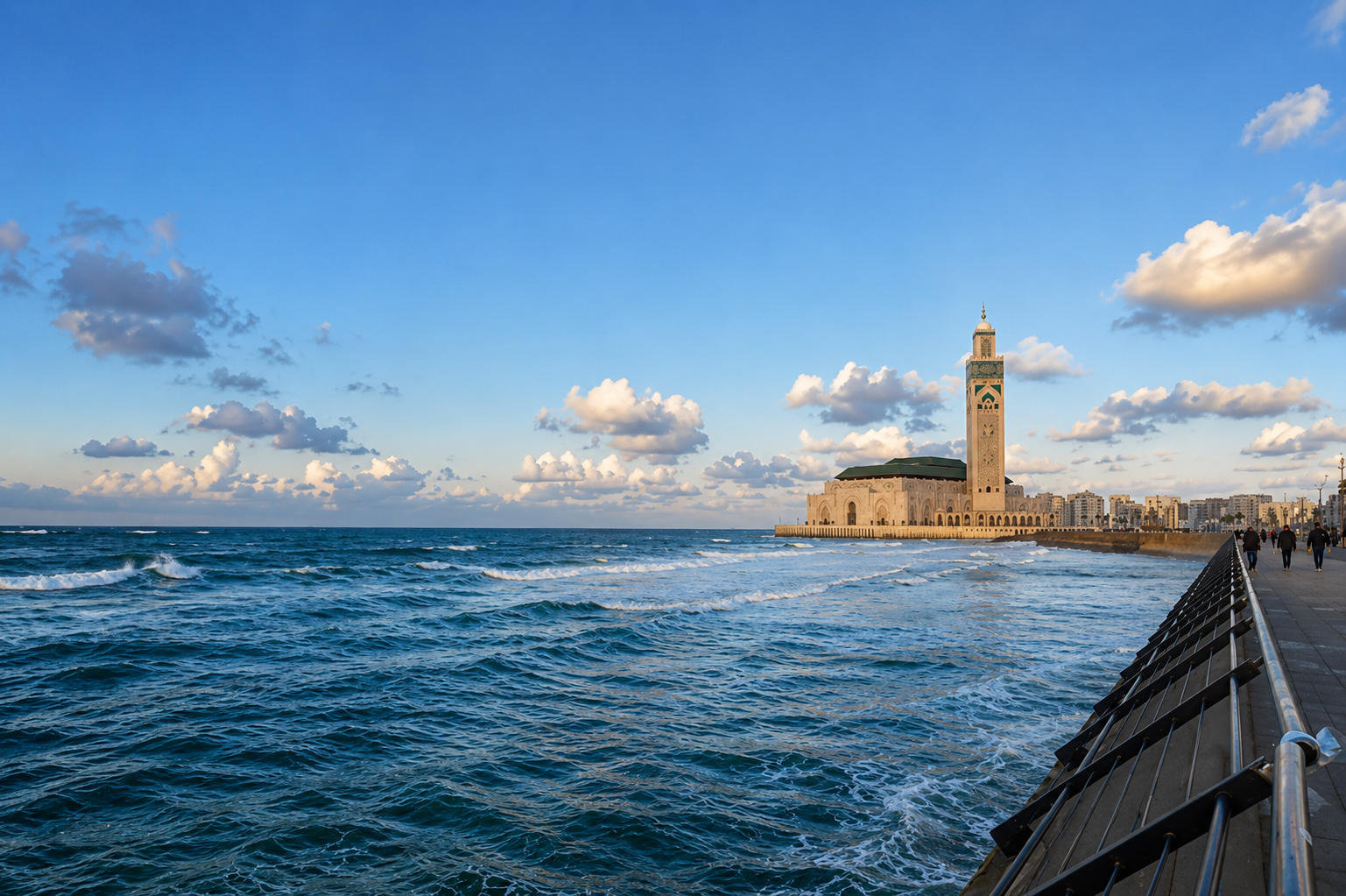
Today we drive from Essaouira to the capital, getting lunch on the way. On arrival, we tour Casablanca, Morocco’s largest and most modern city. We see its French colonial architecture, the lively corniche along the Atlantic, the Hassan II mosque–one of the world’s largest. And tonight we have one last, glorious Moroccan meal, to celebrate our discovery of this fascinating culture, and the new friendships we have made in our group!
Hotel: Novotel Casablanca Center. A comfortable modern hotel close to the sea and the main train station.
Our tour ends after breakfast this morning, but let us know if we can help you make further travel plans!
Professor Andrew Lear accompanies all of our tours. He is our founder; a famous scholar of same-sex love in the ancient world; and a master guide. Early in his career, Professor Lear won the Harvard Certificate of Excellence in Teaching five times, and on our tours you will see why! He really has the knack of making complex issues comprehensible—and entertaining. In most places, we are also required to have a local guide, and Professor Lear has developed a cadre of specially trained guides to work alongside him.
Professor Lear doesn’t have the time to do 10 tours a year, so our tours are not offered on an annual basis. Our general advice is: if you are interested, come on the tour! You never know when our tours will be offered again.
Absolutely. Our tour groups consist of a mix of singles and couples, usually about 50/50. One thing we can guarantee is that no-one will be left out of any conversation or plan because they are single. On the very first tour we did, we came downstairs in the hotel and found the entire group hanging out in the hotel bar. And that is the way our groups are. They make lots of plans in the evening, and everyone is always welcome.
Absolutely. The average age of our guests is in the 60s, and we often have guests in their 80s.
If you are worried about this, please contact us to discuss. This tour involves a fair amount of walking, in museums, city centers (which in Italy are pedestrian zones), and archaeological sites (which may of course have uneven ground). However, we have had many guests with difficulty walking or climbing stairs, and we generally manage to accommodate them, with a little flexibility on all sides.
Absolutely. Just let us know in advance, and we will handle it.
Our tours cover all kinds of LGBTQ+ history and art. The cultural material on some of our tours (especially in Italy and Greece) is more about gay male issues—but this is not true on other tours, for example, in England or Germany, where we cover a wide spectrum of LGBTQ+ material. Our groups are also very welcoming. We have had a great variety of guests in our groups (incuding even a few allies!) and they have been very much part “one of the family.”
We don’t believe so. Of course we don’t know everything that goes on, but our impression is that our tours are GREAT for making friends instead. Note: we include tours of gay nightlife in a few cities (Berlin and Tokyo so far), but in any case, we provide information about gay bars, saunas, etc. And we know what many of our guests go, often with others from the tour group.
Our hotels are gay friendly, absolutely. In Europe and Japan, our hotels are generally carefully chosen 4 star hotels. As a rule, we choose hotels for modern comfort, historic charm, and central location. In India and Nepal, we use almost exclusively 5 star hotels (except for one restored palace).
We are big foodies, and the meals on our tours are generally very good. In fact, we have often been told we could sell our tours as gourmet experiences. We are particularly concerned to include local specialties and regional cuisines.
We include breakfast every day and on European tours generally one other substantial meal (though occasionally none or two). Since our tours often include activities both morning and afternoon, we tend to include lunch. And we tend to leave you free in the evening, except for the first and last evenings on the tour, when we have welcome and farewell dinners—though of course sometimes we include an extra dinner. This tour includes breakfast every day, 7 lunches, and 2 dinners–all gourmet.
Our tours are not 100% all-inclusive, although pretty close. We include all hotel accommodation during the tour, transportation as per the itinerary, all admissions, and guiding. We include breakfast every day and on European tours generally one other substantial meal (though occasionally none or two). Note: we are NOT in the business of “upselling” our guests. There are very few optionals on our tours—and they are only things we really believe that some guests may not want to do (e.g. helicopter trips).
We generally leave the group free in the evenings, and when we are in a major city, we include a free afternoon, for shopping, more museums etc.
Our tours are based on a very high level of knowledge about LGBTQ+ history and art, and indeed about history and art in general. As a result, we include many places that are interesting and/or important but not well-known. Some of these, like the bar where Oliver plays cards with the locals while Elio watches him in Call Me By Your Name, may be closed to the public or difficult to access; others, like the penis temple of Nagoya, are simply not on the beaten tourist path.
Italy is actually very gay-friendly. It has got a bad reputation in recent years, because it does not have gay marriage. But Italy was not homophobic in the way the US and UK were in previous eras, so while it has not caught up with the rest of Europe on gay rights, it was and is a safe and friendly country for LGBTQ+ travelers.
YES. A tour is a big investment, so you need insurance in case you are forced to cancel too late for a refund. This doesn’t happen often, but it has happened a few times in the 13 year life of this company, and the travel insurance companies have been very helpful. But note: you also need travel insurance in case of medical emergency. Your US insurance probably does not cover you abroad, and as we all know, you never know when something will come up. A friend of mine fell on a trip a few years ago and ended up being medivaced from Tunisia to Germany and ultimately back to the US. This would have cost hundreds of thousands of dollars, but luckily, he had good travel insurance, and it was covered 100%. Note: You can buy travel insurance from our ticketing platform, WeTravel, but that that is not obligatory. You should get an insurance policy, but it does not need to be from WeTravel.
Our cancellation policy is flexible. Before the full-payment deadline, we will return any of your deposit that hasn’t been put down in deposits—which generally means we can return 100%. After the full-payment deadline, it is critical (again) that you have travel insurance, as travel insurance will refund your trip in an emergency more completely than we can. We can assure you that it works, because we have seen it work several times: a few guests have had to cancel at the last minute, have been completely reimbursed by their insurance, and in most cases have taken the same tour with us the next time it was offered.
Yes, we can make a payment plan according to your needs.
As Seen In


Morocco is a dream! Thank you!