

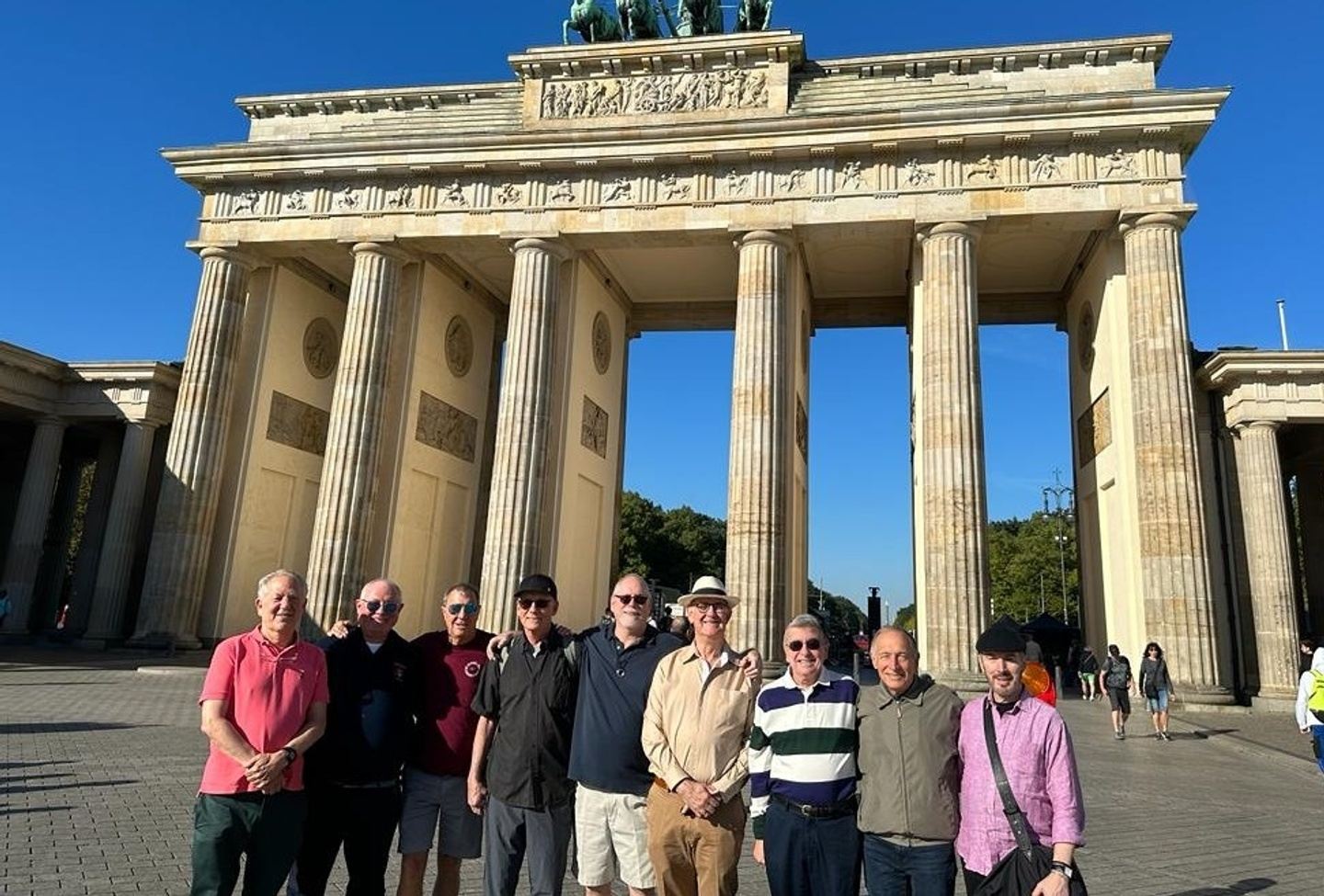
Often, when people talk about the LGBTQ+ rights movement, they start with the Stonewall riots in 1969. Some times they talk about earlier protests or organizations in the US, starting with the foundation of the Mattachine Society in 1950.
But did you know that the first LGBTQ+ rights organization was founded in Germany, in 1897? That the first LGBTQ+ magazine was published in Germany, starting in 1896? That there was already a pro-gay-rights movie, called Anders als die Andern (Different from the Others), made in Germany, also in 1919? That there was an LGBTQ+ rights anthem, called Das Lila Lied (The Lavender Song), written in Germany in 1920?
In fact, the word ‘homosexual’ itself was coined in German (along with ‘heterosexual’) in a letter between two gay rights activists in 1868, and appeared in print in German in 1869? To make a long story short, the beginnings of the LGBTQ+ rights movement are in Germany. And before World War II, Germany—especially Berlin—was the center of the LGBTQ+ universe, the gay version of gay Paris—with over 100 gay, lesbian, and otherwise queer venues operating at any moment in the 1920s.
All of this, of course, ended with the Nazi take-over in 1933, when, symbolically, they turned the best-known gay bar in Berlin, the El Dorado (on the Motzstraße, still the main drag on Berlin’s gayborhood) into a Nazi party campaign office. During the Nazi years, instead of abolishing the German anti-sodomy law—as activists almost succeeded in accomplishing in the early 1930s—they made it tougher. Over 100,000 gay men were arrested in the Nazi years, and over 10,000 were sent to concentration camps, where they were treated with even more brutality than other prisoners (lesbians were not covered by the law, though some were arrested under other laws).
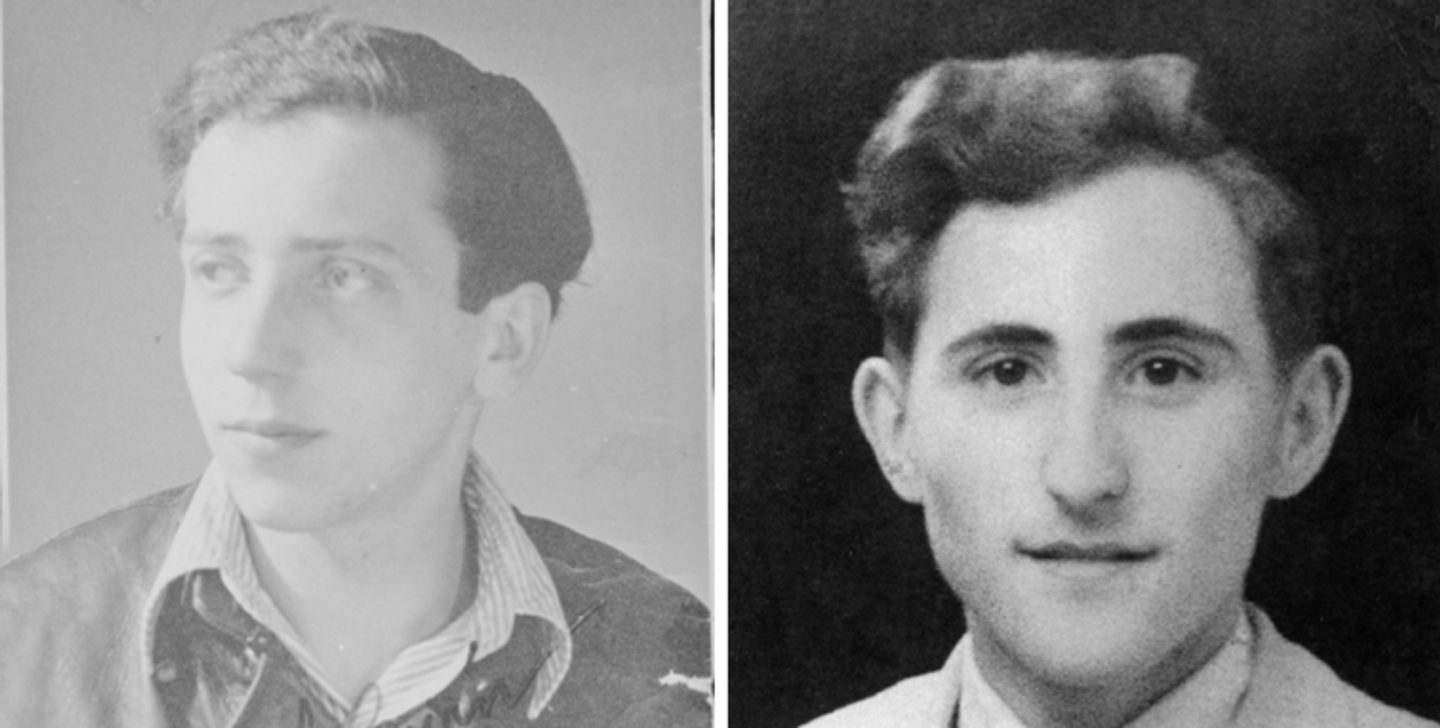 But of course there were still LGBTQ+ people….and some of them resisted the Nazis. Some resisted mainly by loving who they loved, like Lily Wust, who left her husband, who was in the army, for a lesbian relationship with a Jewish woman who was in the resistance, Felice Schragenheim—until, sadly, Schragenheim was arrested and taken to the “model” concentration camp at Terezin, in today’s Czechia. Lily Wust started her adult life as a non-political woman married to a Nazi sympathizer; imagine how brave love had made her when she attempted to visit Schragenheim in Terezin!
Wust and Schragenheim’s story is told in the novel and movie Aimée and Jaguar. There is also a movie about the resistance group the White Rose, the group of young Munich intellectuals who distributed flyers about the Holocaust that was going on and urging the German people to resist. But the movie focuses on the one woman in the group, Sophie Scholl, rather than on her brother, the group’s founder, Hans Scholl and makes no mention of his sexuality. In fact, Hans Scholl had been convicted under Germany’s sodomy law at the age of 17. He was let off with time served because of his youth, and this allowed the story to vanish, until it was rediscovered by researchers in the 1990s. But it is undoubtedly an important part of the story of how he came to stand against the regime.
We have heard that Dustin Lance Black is planning to make a movie about the group that focuses on Hans. And really, he was the kind of hero who deserves a movie made about him. At both of his trials, he tried to take full responsibility for everything, exonerating his boyfriend (successfully) at the first and the other members of his group (unsuccessfully) at the second. And as he was led (at age 24) to the guillotine, he shouted at these last words, “Es lebe die Freiheit!” (Long live freedom).
I am also working in Hollywood on a movie project about a gay Resistance hero, a man called Gad Beck, who in the 1940s was a gay Jewish teenager who ended up leading a Resistance group in Berlin, the heart of the Reich. Unlike Wust and Scholl, Beck was Jewish—or half-Jewish—an important distinction in the insanity of Nazi Europe. He could have used his privileged status to protect himself, but that was not Beck’s style. Instead, he ran a ring that helped Jews hiding in the city by getting them food, or forged ration cards, or with new hiding places when their old ones were discovered.
It’s hard to say how many lives he saved, but at one point a list of three dozen people he was supplying fell into the hands of the Gestapo–but such were Beck’s amazing capacities as an underground organizer that all 36 survived. And even he survived when the Gestapo finally arrested him. He was never sure why or how, but he did use one of his other main skills to save himself: bullshitting. The Gestapo wanted information about his organization, and day after day—like Scheherazade—he wrote reams of material for them, all about the American Jewish organizations that were sending him money, the Swiss diplomats who were bringing it to him—everything and everyone except the names of the people he was hiding! And eventually, the Russians invaded, and the Gestapo fled….
Sadly, the last hero I am going to tell you about—also Jewish—did not survive. His name was Fredy (Alfred) Hirsch. He was an athletics instructor for Jewish organizations, originally in Germany, and later, after 1933, in Czechia. Like many of the bravest teachers, he refused to flee when the Nazis took (then) Czechoslovakia (like, say, his mother and brother, who fled to Bolivia and survived).
Instead he was deported to Terezin, where, amazingly, he used his commanding presence to convince the Nazis to let him continue to organize athletics for children—and also, secretly, education, which was strictly forbidden. And ultimately, even more amazingly, when he and his children were deported to Auschwitz, he convinced the camp authorities to let him have a separate barracks where his children could have classes during the days. In both camps, he managed to get better rations for the children and to cut their mortality rate immensely by demanding they follow strict hygienic rules.
Unfortunately, at the end, when he learned that his charges were going to be gassed, he died of an overdose—either a suicide, or murder carried out by the camp doctors who wanted to prevent him from leading a camp revolt (which would have led to their deaths). No-one knows what happened. But one of the young teachers whose life he managed to save in Auschwitz, and who ultimately survived, defined him as a Tzadik—a Jewish holy man.
Want to learn more? Come on Oscar Wilde Tours’ Germany tour in 2027, with Munich (including a special White Rose tour), Berlin (with one afternoon dedicated to Gad Beck), and Czechia, where we will follow the Fredy Hirsch story. Plus 2 gay kings and their palaces, many great art museums, city tours, lots of opportunities for concerts and operas, and much more!


